Tokyo's Solar Rule Binds Builders, Not Homeowners
Tokyo's solar rule binds building suppliers supplying at least 20,000 m² a year in Tokyo. Its cap-and-trade sets reduction duties of 50% or 48%.
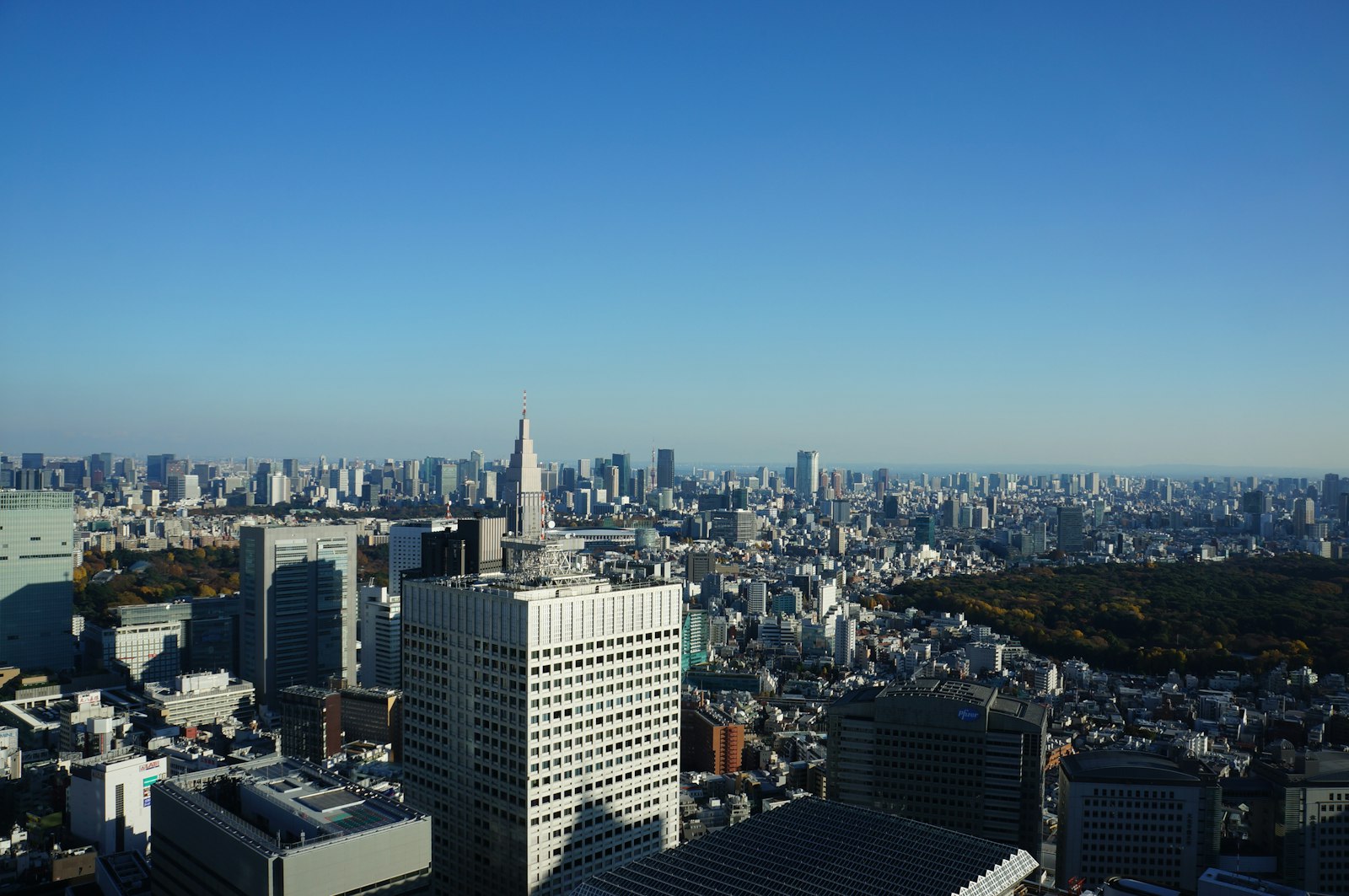
When Tokyo’s solar rule took effect on 1 April 2025, most coverage outside Japan described it as a requirement that new homes carry solar panels. The ordinance instead places the duty on building suppliers and measures their total annual supply in Tokyo. A family buying a new home in Setagaya is not a regulated party.
The instrument
The rule is the 建築物環境報告書制度, the Building Environment Report System. It came from an amendment to Tokyo’s environment ordinance, the 都民の健康と安全を確保する環境に関する条例, promulgated on 22 December 2022 as Ordinance No. 141, and it applies from 1 April 2025 (Tokyo Metropolitan Government).
It binds a 特定供給事業者, a specified supplier: a building supplier whose combined floor area of small and mid-sized standardised buildings built or supplied in Tokyo in one year reaches 20,000 m². The buildings in scope are new 規格建築物 under 2,000 m² each, which is 98% of Tokyo’s roughly 50,000 annual building starts by count and 52% by floor area. Anything at or above 2,000 m² sits under the older 建築物環境計画書制度 (TMG scheme guide).
A supplier in scope carries five duties: insulation and energy performance, renewable installation, EV charging provision, an explanation of the building’s environmental performance to the buyer, and a report. The report is due by the end of September of the following fiscal year, and Tokyo publishes what suppliers report.
The target is a portfolio quantity
The renewable standard is set for the supplier, not the building:
Required capacity (kW) = eligible buildings in the year × zone coefficient × 2 kW per building.
Eligible buildings are the year’s supplied buildings minus those the supplier may exclude, including roofs with under 20 m² of usable area, sites where 2 kW physically will not fit, and buildings blocked by local building restrictions. North-facing roof area does not count. The zone coefficient is set at 85%, 70% or 30% depending on how suitable the area is for solar, with a flat 85% available across Tokyo instead. Excluded buildings still have to meet the insulation and EV-charging standards; only the solar obligation drops away (TMG explanatory material, November 2024).
So a builder can put a larger array on a south-facing house in Hachioji and none on a shaded infill lot in Nakano. The total can still meet its yearly target.
Tokyo applies an equivalent energy-performance standard to the average of homes supplied within the city. Japan’s Housing Top Runner benchmark uses a nationwide average. A builder cannot use houses in Fukuoka to meet the Tokyo average.
Early evidence from other jurisdictions
The Renewable Energy Institute published an assessment on 26 January 2026 covering five Japanese jurisdictions with solar mandates. In Tokyo and in Kawasaki, which started the same month, about half of new homes fall inside the obligation. Kawasaki surveyed residents who had installed solar before its mandate began, and roughly 90% reported satisfaction, with electricity-bill savings the main reason. The report identified slow adoption in apartment buildings as a broader challenge (Renewable Energy Institute).
Others have followed. Kyoto Prefecture and Kyoto City, and Gunma Prefecture, put obligations on large buildings such as factories and warehouses, and Kyoto exceeded its own installation target. Sendai has an ordinance requiring solar and high insulation on new homes from April 2027. Nagano is preparing a large-building obligation from FY2028.
The first compliance reports under Tokyo’s scheme, covering FY2025, were due by the end of September 2026. Tokyo has not yet published those results.
The other Tokyo rule, now in its fourth period
Tokyo has been regulating existing buildings far longer. Its cap-and-trade programme, the 総量削減義務と排出量取引制度, started in April 2010 and covers about 1,200 facilities: any site using 1,500 kL or more of crude-oil-equivalent energy a year, with a reduction duty once that holds for three consecutive years. Offices, shopping centres, government buildings, hotels, hospitals and factories are all in it.
The obligation ratchets by period, measured against a base year taken as a three-year average within FY2002 to FY2007:
- First period, FY2010–2014: 8% or 6%
- Second period, FY2015–2019: 17% or 15%
- Third period, FY2020–2024: 27% or 25%
- Fourth period, FY2025–2029: 50% or 48%
The higher figure applies to office buildings and heat suppliers, the lower to factories, water and sewage plants, waste facilities and offices that buy in a lot of heat (TMG, 11 March 2026).
Compliance can come from a facility’s own energy saving, its own renewables, buying low-carbon electricity or heat, trading, or banking from the previous period. Miss the obligation and the governor may order a reduction of 1.3 times the shortfall; breaching that order carries a fine and publication of the breach.
The results, on provisional FY2024 figures: covered facilities emitted 11.42 million tonnes, 31% below the base year, in a year with a hot summer and warm shoulder seasons. Across the whole third period they cut 26.43 million tonnes. About 78% of facilities were on track to meet their duty through their own measures, and 22% were not.
In the fourth period, emissions are calculated using the actual emission factor of the electricity and heat a facility bought. This gives covered facilities a direct compliance incentive to procure lower-carbon electricity, alongside the grid and storage constraints that decide what is actually buyable.
How Tokyo’s scheme fits with the national scheme
Japan’s national scheme arrived later and aims somewhere else. The GX Emissions Trading Scheme became mandatory in April 2026 and covers legal entities emitting 100,000 tonnes or more of direct CO2, averaged over the preceding three years. It regulates Scope 1.
The revised GX Promotion Act addresses the overlap. Article 76 lists what a local ordinance may still do to an entity inside the national scheme. A city may require emissions reporting. It may also regulate CO2 from electricity or heat supplied by others. Direct Scope 1 regulation by ordinance would likely conflict with the Act.
Tokyo’s answer was to remove the Scope 1 emissions covered by the national scheme, while retaining the remaining Scope 1 emissions and all Scope 2 emissions. Around 100 facilities out of roughly 1,200, held by about 30 entities, are affected, and most of them are offices and commercial sites where only part of the Scope 1 sits inside the national scheme.
Tokyo continues to set housebuilder solar targets and count emissions from electricity and heat bought by Tokyo facilities.
What changes now
Facilities covered by Tokyo’s cap-and-trade scheme face a 50% or 48% reduction duty against a base year that is now roughly two decades old. They can buy lower-carbon electricity or renovate the buildings and equipment that use it.
Housebuilders should watch the Tokyo-average rule. It shows how a city can apply a national benchmark to local supply. Sendai and Nagano are already moving on their own building rules.
The public reports also give building-technology companies data for planning retrofits.
Tokyo’s cap-and-trade programme has measured covered facilities since 2010. Tech for Impact Summit 2027 is in Tokyo on 18–19 May 2027, co-hosted with the United Nations University. It is invitation-only. If this is your work, join the waitlist at tech4impactsummit.com/apply.