Perovskite Solar in Japan: What Is Actually Being Built
Perovskite solar in Japan has a subsidy, a factory site and a date. Here is the money METI committed, what Sekisui is building in Sakai, and what is unproven.
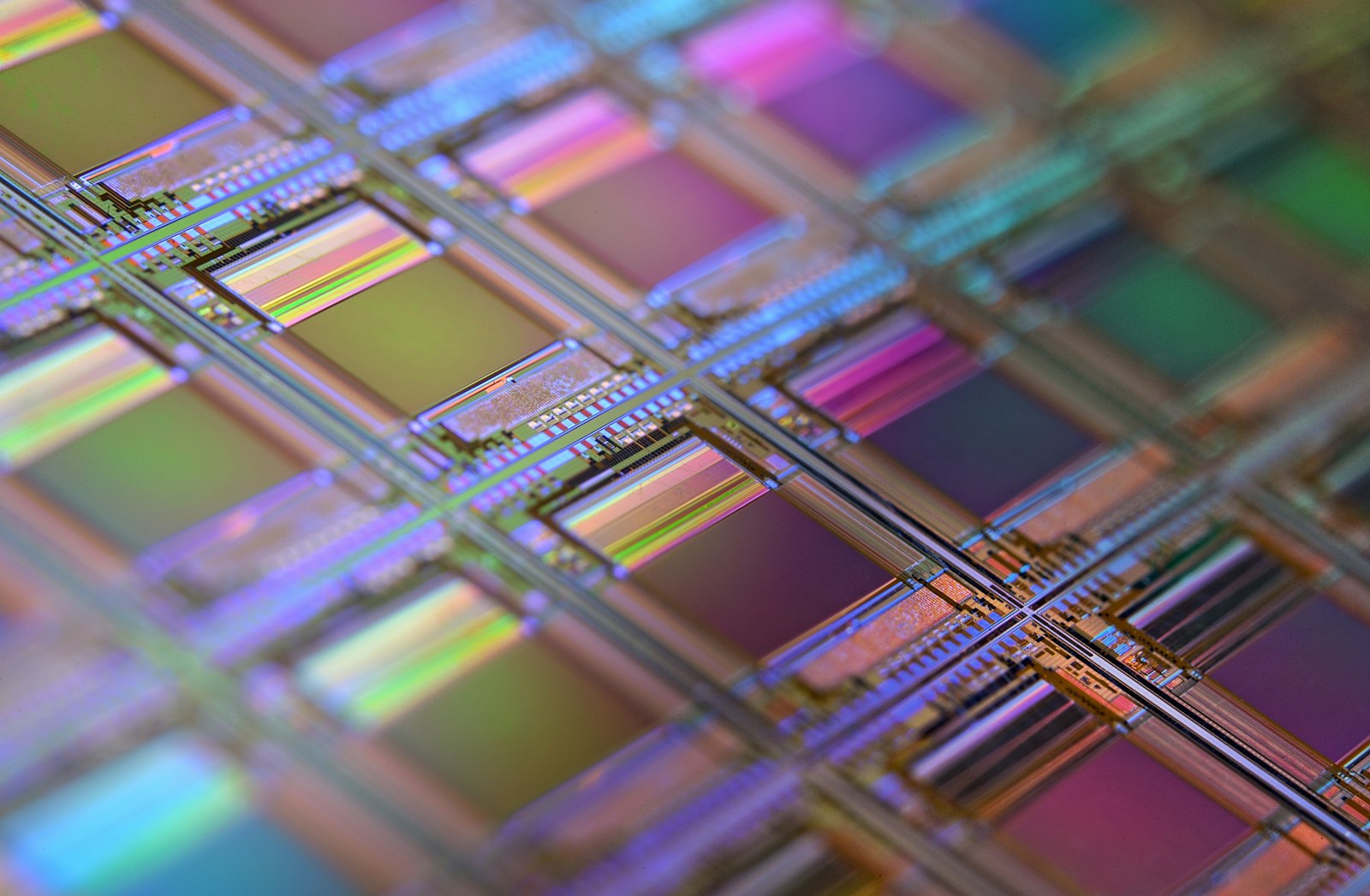
A 100 MW perovskite solar production line is scheduled to start operating on 1 April 2027, in Sakai, Osaka, inside buildings bought from Sharp’s headquarters plant. That is the most specific fact available about Japan’s perovskite programme, and it comes from a board resolution rather than a strategy document (Sekisui Chemical, 26 December 2024).
The money the state has actually committed
Three separate pools are funding this, and they are not the same size.
The largest is a METI programme, the Support Project for Building GX Supply Chains. Sekisui Chemical disclosed its award on 26 December 2024, the day after the adoption decision. The terms are unusually specific for a Japanese subsidy: a subsidy rate of one half, eligible costs of ¥314.5 billion, a total subsidy of ¥157.25 billion, a stated production capacity of gigawatt class, and a subsidy period running from November 2024 to the end of February 2029 (Sekisui Chemical).
The second is NEDO’s Green Innovation Fund project for next-generation solar cells, whose Japanese project page states a budget ceiling of ¥105.1 billion. Its targets are cost targets, not deployment targets: a generation cost of 14 yen/kWh or less for single-junction cells, and 12 yen/kWh or less with conversion efficiency of 30% or more for tandem cells (NEDO). The English page for the same project puts the cost-parity year at 2030 (NEDO).
The third is the smallest and the most recent. The Ministry of Finance’s provisional list of GX Economy Transition Bond allocation candidates for FY2026 includes ¥7.0 billion for promoting social implementation models of perovskite solar cells (MOF). Set against the ¥387.3 billion the same list allocates to AI robotics foundation models, that is a rounding error, and it is the line that funds getting cells onto actual buildings.
What the state has not published, at least not in a document I can point you to, is a headline deployment target in gigawatts with a year attached. The nearest thing is in Sekisui’s own disclosure, which describes the policy it is building against as an early gigawatt-class domestic supply system by 2030. Treat any bigger number you see quoted as needing its own source.
Why film, and why now
Japan is not trying to compete with China on silicon. The International Energy Agency put China’s share in all the manufacturing stages of solar panels, from polysilicon through ingots, wafers, cells and modules, above 80%, and projected the polysilicon, ingot and wafer share to reach almost 95%. Xinjiang province alone accounts for 40% of global polysilicon manufacturing capacity (IEA, Solar PV Global Supply Chains, 2022).
Sekisui is not building another silicon-panel factory. Film-type perovskite is light and flexible. It can cover roofs that cannot carry glass modules. It can also go on walls.
Japan has little open land for new solar fields. Sekisui is starting with light-load roofs and public buildings. It names school gymnasiums used as evacuation shelters. Factory and warehouse roofs and walls come next.
What one company has contracted for
Sekisui Chemical’s board resolved on 26 December 2024 to begin mass production. The vehicle is Sekisui Solar Film Co., Ltd., established 6 January 2025 with capital of ¥100 million, owned 86% by Sekisui Chemical and 14% by the Development Bank of Japan. Total investment is ¥90 billion including the subsidy, covering the building purchase and the 100 MW production equipment. Sales were to begin in FY2025 from existing equipment; the new line’s operation start date is 1 April 2027; a gigawatt-class line is the 2030 goal.
On 27 March 2026 the company announced the start of the business itself, under the brand SOLAFIL, with manufacturing technology on existing equipment established and a product and installation specification for metal roofs ready. It stated plainly that FY2026 output would be limited by existing equipment, and that standing up the 100 MW line in FY2027 is the top priority (Sekisui Chemical).
Sekisui has run demonstrations since 2024 and shipped its first commercial product in 2026 at volumes it describes as limited. Reaching its 2030 goal requires the planned 100 MW line to grow tenfold in three years.
What they bought was a working site, not an empty building
The detail that explains the timeline sits in the same resolution. Sekisui did not buy only the buildings at Sakai. It took over the power supply equipment and the cooling equipment with them (Sekisui Chemical).
Those are the slow parts of a factory. A new site needs a grid connection sized for the load and a cooling system built around it, and both are measured in years. Buying a plant that already has them is how a 100 MW line gets a 2027 date at all.
The resolution is also candid about what the money is for. Sekisui says the technology was established to a point, and that commercialisation in 2025 would run on existing equipment. The problems it names are reducing manufacturing cost and expanding the production capacity that makes the cost reduction possible. The subsidy is not buying an invention. It is buying volume.
Two other things were signed the same day: a basic agreement with Sharp covering the building sale, and a shareholders’ agreement with the Development Bank of Japan on running the new company jointly. The resolution adds that the company intends to keep overseas expansion in view and to invest in stages toward a gigawatt-class line in 2030.
The demonstrations map the intended market
Sekisui’s public demonstration list is the clearest statement of where film perovskite is meant to end up: bank branches and a training facility, a noise barrier, a wind turbine tower, a school gymnasium roof, Kobe Airport, agrivoltaics over a paddy field, and a development programme for improved wall-mounting methods (Sekisui Chemical perovskite news index).
None of those are utility-scale fields. Every one is a roof, wall or structure that already has a company or municipality responsible for it. Film perovskite is being built for those surfaces. Japan’s offshore wind auctions and grid battery queue solve different constraints.
What the numbers do not say
The NEDO cost figures are targets for 2030, not achieved costs. Nothing in the public record establishes that film perovskite is at grid parity today, and a subsidy rate of one half on ¥314.5 billion of eligible costs is a reasonable proxy for how far from unsubsidised economics the first gigawatt is expected to be.
Public data on outdoor lifetime is still limited. Silicon modules are sold with multi-decade performance warranties built on decades of field data. Perovskite does not have that history. Several of the demonstrations above have now run for more than a year on real buildings. Those results matter more than another laboratory efficiency record.
The subsidy period ends in February 2029. That is the date by which the gigawatt-class capacity the award was granted against needs to exist, and it sits between the 2027 line start and the 2030 goal.
What to watch
Whether the Sakai line starts on 1 April 2027 is the first checkable milestone.
Japan is spending public money on a manufacturing line in a technology where it holds an early lead and China holds the incumbent position. The GX programme funds the supply side. The GX-ETS adds domestic demand.
Tech for Impact Summit 2027 is in Tokyo on 18–19 May 2027, co-hosted with the United Nations University. We will look at the factories and projects behind Japan’s industrial policy, including the ones that miss their dates. It is invitation-only. If this is your work, join the waitlist at tech4impactsummit.com/apply.