Japan Has Certified 610 Nature Sites for Its 30by30 Target
Japan has certified 610 nature symbiosis sites and registered 64,600 hectares as OECM. The 2024 statute behind them, and what it means for TNFD reporting.
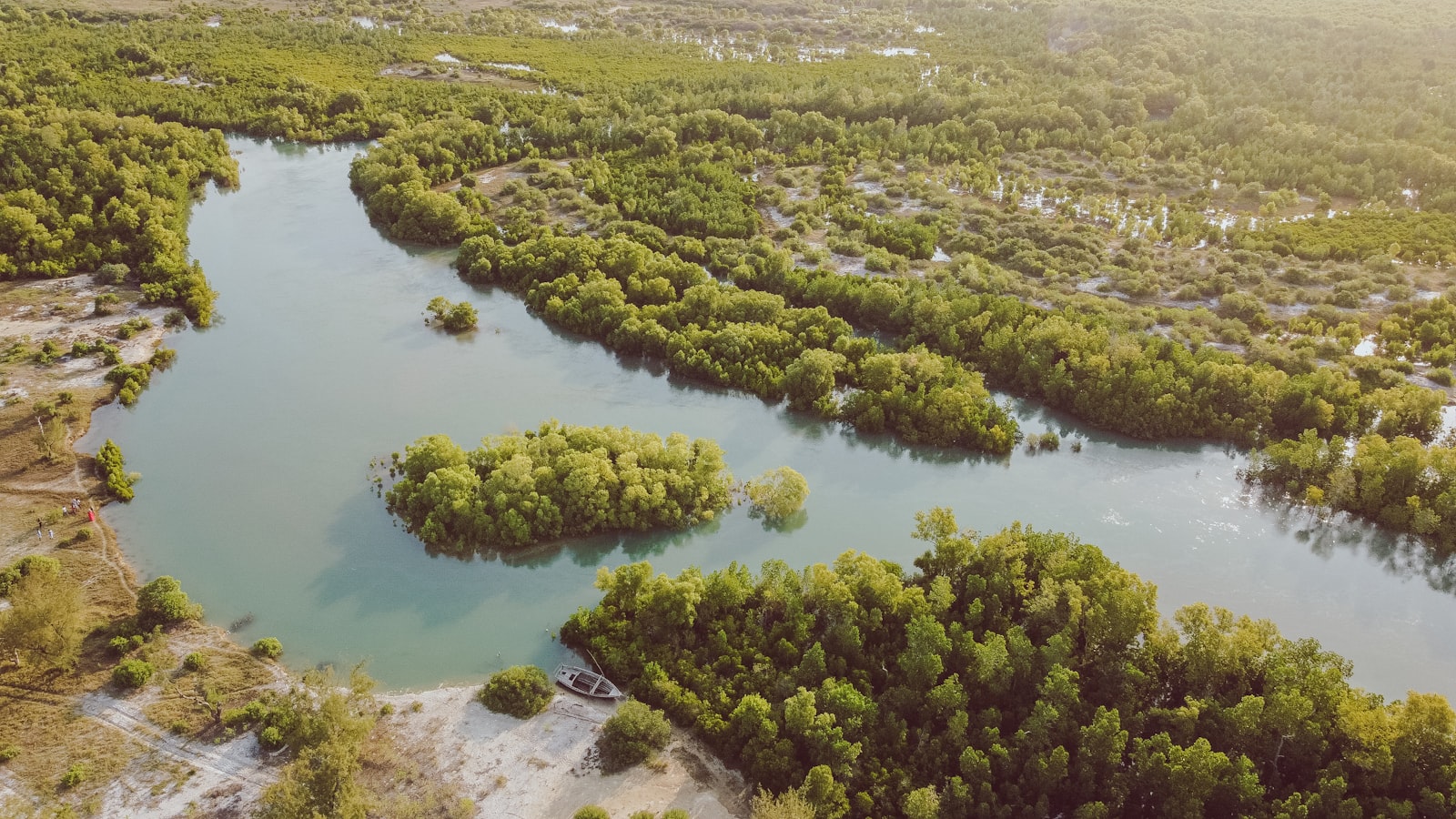
Japan had certified 610 自然共生サイト, nature symbiosis sites, by the end of June 2026 (Ministry of the Environment, 3 August 2026). The areas inside them that do not already sit within a protected area are registered internationally as OECMs. That cumulative registered area now stands at 64,600 hectares.
How OECMs add to protected areas
The Kunming-Montreal Global Biodiversity Framework, adopted at CBD COP15 in 2022, set a global target of conserving at least 30 per cent of land and sea by 2030. Japan folded it into its National Biodiversity Strategy 2023-2030 as a domestic target under a 2030 nature-positive goal (Ministry of the Environment).
The framework counts formal protected areas and OECMs as separate categories. An OECM is an area outside the protected-area system that nonetheless delivers effective, long-term conservation. Japan’s ministry lists satoyama, company forests, shrine and temple forests, and urban green spaces among the land types that can enter its certification system.
Japan reports these areas to the World Database on Protected Areas and the World Database on OECMs. The two registers are a joint UNEP and IUCN project managed by UNEP-WCMC. Global progress against 30by30 will be assessed from them (Ministry of the Environment). A Japanese site can be certified at home before it appears in the international count. Registration happens in annual batches. The August release therefore gives both the latest addition and the cumulative area.
The current position is that protected areas and OECMs together cover 21.0 per cent of Japan’s land, of which OECMs account for 0.2 percentage points, and 13.3 per cent of its sea (Ministry of the Environment). The ministry notes the totals appear unchanged from the previous year because of rounding.
Japan still has a nine-point gap to its land target. OECMs currently add 0.2 percentage points.
The 2024 law
The certification scheme began in FY2023 as an administrative programme. In 2024 the Diet passed the Act on Promotion of Activities for Increasing Biodiversity in Local Areas, Act No. 18 of 2024, generally shortened in Japanese to 地域生物多様性増進法. It came into force on 1 April 2025 and is jointly administered by the Ministry of the Environment, the Ministry of Agriculture, Forestry and Fisheries, and the Ministry of Land, Infrastructure, Transport and Tourism (Ministry of the Environment, 1 April 2025).
The 2024 act gave the scheme a legal process. An applicant submits one activity plan for a named area. The three competent ministries certify that plan. The area then becomes a 自然共生サイト. The act also allows a municipality to sign a biodiversity maintenance agreement with the operator and landowner.
The ministry describes two plan routes. An operator can seek certification for an activity implementation plan. A municipality and participating operators can use a collaborative activity implementation plan. The act covers work that protects biodiversity or restores habitat. In each route, the applicant still has to identify the activity and the area.
Applications go through the Environmental Restoration and Conservation Agency, ERCA. The environment ministry publishes the guide and forms on its nature symbiosis site page (Ministry of the Environment). A company does not file separate applications with all three ministries. The joint administration sits behind one intake route.
The applicant still has to define the activity and the area. A certificate attached to one forest or green space cannot be reused as evidence for another site in the same corporate group.
The third round of FY2025 certified 108 sites (Ministry of the Environment, 17 March 2026). The first round of FY2026 added 56 (ERCA, 30 June 2026).
About half of the applicants are companies
The environment ministry’s own explainer states that applicants are about half companies, with local governments, NPOs and individuals making up the rest (Ministry of the Environment, April 2026, PDF).
The same document names the kinds of land involved: satoyama, company-held woodland, shrine and temple forests, and urban green space. Its worked examples include Nippon Paper’s Hoo company forest in Yamanashi and Mitsui Sumitomo Insurance’s Surugadai green space in Tokyo.
The 610 sites do not form one type of asset. A company forest can cover a wide rural area. An urban green space can sit beside an office. Their management plans and ecological records will look different even when both carry the same certification label.
That makes the site name and boundary important in a corporate report. “We support a nature symbiosis site” is too vague to check. Name the site and link its certificate. Then say whether the company owns the land or funds the activity. A reader can see what the government reviewed.
The certificate date also fixes the reporting period. Work done before certification may still be real, but the certificate does not reach backwards unless its terms say so. Keep the dated records behind work from earlier years. The later certificate is not proof for every prior year.
Support certificates
A company that provides financial, human or technical support to a certified site can apply to the environment ministry for a 支援証明書, a support certificate confirming that its contribution helped conserve biodiversity at that site. The ministry states plainly that the scheme was designed with TNFD and comparable disclosure in mind, and that it entered full operation in FY2025 (Ministry of the Environment, April 2026, PDF).
Nippon Paper uses the ownership route for its Hoo company forest in Yamanashi. A company without suitable land can support conservation at another certified site and apply for a support certificate. We wrote about the wider rise of nature reporting in Asia in the TNFD briefing.
The two documents carry different facts. Ministers certify the site and its activity plan. The support certificate records the named contribution. Neither document measures how every species or ecosystem service changed.
A sustainability report can quote the site, plan and support from these records. Any claim about the ecological result needs monitoring data.
Only the part of a certified site outside an existing protected area enters the OECM database. The ministry certified 23,100 hectares in FY2025. It registered 10,000 hectares from that group as OECM after removing overlaps (Ministry of the Environment). The two area figures describe different boundaries.
The August update also changed the protected-area records held in the international database. After both updates, protected areas and OECMs covered 21.0 per cent of Japan’s land and 13.3 per cent of its sea. The ministry says the rounded totals look unchanged from the previous year.
The 10,000 hectares added in this batch did not move the national percentage enough to change the rounded figure. It was still a real addition to the register. A report can cite the new area and the cumulative 64,600 hectares. It should not claim that the national share rose unless the published percentage actually changes.
Japan’s 30by30 total uses only the OECM-registered portion outside existing protected areas.
What a company should actually check
Quote a certificate only for the claim printed on it. The assurance regime arriving for sustainability disclosure will require the same discipline elsewhere in the file.
Tech for Impact Summit 2027 is in Tokyo on 18–19 May 2027, co-hosted with the United Nations University. The summit is invitation-only. If you work on nature data, conservation finance or corporate disclosure, join the waitlist.