Tokyo Just Stopped Counting Some of the Emissions It Has Regulated Since 2010
Japan's national emissions trading scheme went mandatory for scope 1 in fiscal 2026. Tokyo's own cap-and-trade has covered scope 1 and scope 2 since 2010. About 100 Tokyo sites sit inside both, and the revised GX Promotion Act decided which one gives way.
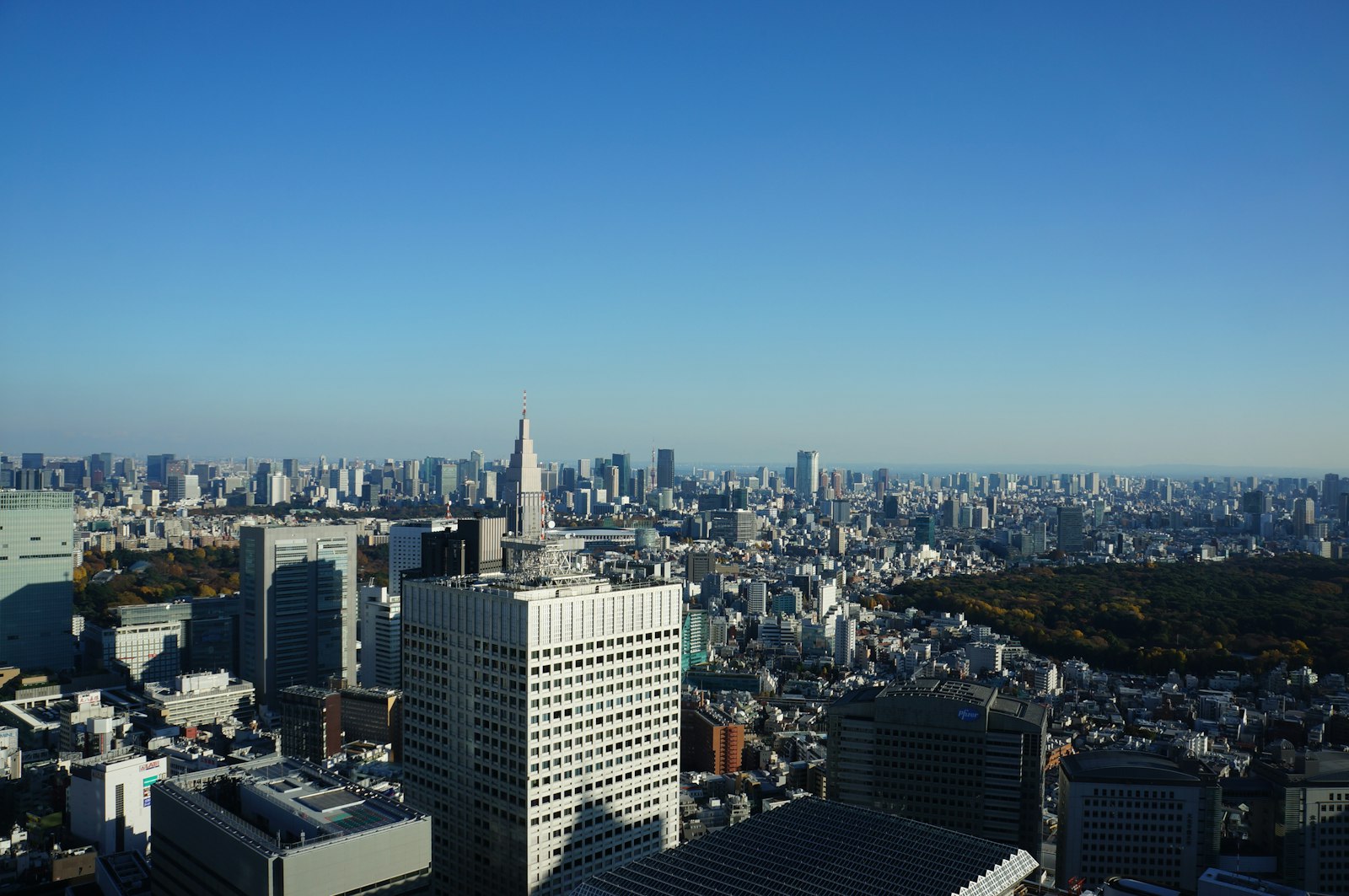
On 1 April 2026 Tokyo’s amended environmental ordinance took effect, and the city’s cap-and-trade scheme stopped counting a slice of the emissions it had regulated for sixteen years.
Nothing was deregulated. The slice moved. Japan’s national emissions trading scheme went mandatory in fiscal 2026 and took direct emissions with it, so Tokyo rewrote its own scheme around the gap.
The Tokyo Metropolitan Government set out the whole adjustment in a seminar for covered operators on 11 March 2026 (TMG, 11 March 2026). It is a quiet document about a question every country with a city-level carbon scheme is about to face.
Two schemes, one tonne
Tokyo has run a mandatory cap-and-trade scheme since fiscal 2010. It covers sites using 1,500 kilolitres or more of energy a year in crude-oil equivalent, about 1,200 of them. Reporting covers CO2, methane, nitrous oxide and the fluorinated gases. The reduction duty itself applies to direct and indirect CO2, which TMG labels scope 1 and scope 2. The fourth compliance period runs from fiscal 2025 to fiscal 2029 at a reduction duty of 50 percent or 48 percent against a base that is normally a three-year average between fiscal 2002 and fiscal 2007. Miss it and the city issues an order to reduce 1.3 times the shortfall, with a fine and publication if the order is ignored.
It has worked. TMG’s preliminary figure for fiscal 2024 is 11.42 million tonnes across covered sites, 31 percent below the base, and it expects 78 percent of sites to have met the third-period duty through their own measures rather than by buying.
The national scheme arrives on different ground. It covers corporations whose direct CO2 averages 100,000 tonnes or more over the preceding three years, requires an annual verified emissions report, and requires each company to hold allowances equal to its verified emissions. The obligation is on scope 1 only.
A corporation above 100,000 tonnes that also occupies a large Tokyo building therefore owes a reduction on the same direct emissions twice, under a national law and a city ordinance written fifteen years apart.
TMG puts the overlap at roughly 100 sites held by roughly 30 operators. And the detail that makes this harder than it sounds: most of those are offices and commercial buildings where the nationally covered operator holds only part of the site.
The law chose, and it chose the national scheme
The revised GX Promotion Act settled it, and not by general principle. Article 76 lists what a local ordinance may still require of a company covered by the national scheme. There are two items. Reporting of actual CO2 emissions from business activities. And matters concerning the CO2 emitted in supplying electricity or heat that the company uses.
So a city may still ask a covered company for targets, plans and reports, and may still regulate the emissions embedded in its purchased electricity and heat. What is not on the list is scope 1. TMG’s own reading is that an ordinance regulating a covered company’s direct emissions would be likely to conflict with the statute.
This is a sharper instrument than a blanket pre-emption clause. It does not remove the company from the city’s scheme. It removes one category of emissions from what the city may put a duty on, and leaves everything else in place.
What Tokyo actually did
Tokyo’s answer is a carve-out at the level of the tonne, not the company.
The scope 1 emissions of a nationally covered operator come out of the city’s reduction duty. The rest of the scope 1 at that site, belonging to everyone else in the building, stays in. All of the scope 2 stays in, which is exactly the category Article 76 preserves. The site still reports its whole emissions to the city in its ordinance plan, both halves, every year. Verification of the carved-out portion can be waived, since the national scheme is already verifying it.
So a Tokyo office tower in 2027 may contain one tenant whose direct emissions are counted nationally, several whose direct emissions are counted by the city, and one electricity bill that is counted by the city for all of them.
The arithmetic is where the work is
A reduction duty is a comparison between a base and a year. Remove emissions from one side only and you have invented a reduction that nobody achieved. TMG removes them from both.
The covered operator’s scope 1 is subtracted from the base emissions and from the annual emissions. Where the site can reconstruct its historic scope 1, the actual figure comes out. Where it cannot, because the base was set using a standard intensity factor, the city takes the same proportional share off the base instead. TMG’s worked example is a site with a 10,000 tonne base and 30 percent national-scheme scope 1, which leaves 7,000 tonnes on both sides of the comparison.
Then it has to be redone every year, because companies enter and leave the national scheme. The base is readjusted annually, the annual emissions are reported annually, and compliance is judged on the five-year totals rather than year by year. In TMG’s notation, the test is that the sum of the yearly caps over five years is at least the sum of the yearly emissions less the carved-out tonnes, where each yearly cap is the adjusted base times the reduction rate.
There is a second-order effect worth knowing about. Designation into the Tokyo scheme runs on energy use, not emissions, at that 1,500 kilolitre line. If a site’s energy use falls below the line for three consecutive years once the national operator’s share is excluded, it moves to the equivalent-designated class: still reporting, no longer carrying a reduction duty. A building can therefore leave the city’s duty without reducing anything, because a tenant’s obligations moved up a level of government.
Why this is a template and not a local curiosity
Subnational carbon schemes usually predate national ones. Tokyo’s is sixteen years old and started in a year when Japan had no national carbon price at all. California, Quebec, the Chinese provincial pilots and the German building rules all sit in some version of the same sequence.
When the national layer lands there are three honest options, and each costs something. A city can exempt the covered companies outright and lose both the scope 2 lever it still legally holds and the reporting it has built. It can leave both duties running and accept that some companies are regulated twice on the same tonne. Or it can split the tonnes.
Tokyo split the tonnes. The price of that is the paperwork above: an annual recalculation of a base year set two decades ago, a proportional fallback for sites that cannot reconstruct their own history, and a five-year settlement rather than an annual one. All of it is paid by the compliance team in the building, not by either government.
Scope 2 is the awkward half to defend, because the emissions happen at a power station outside the city limits. It is also the lever that moves soonest. In the fourth period Tokyo counts bought electricity at its actual emission factor, so which supplier a building signs with now shows up directly in its compliance position.
The dates
The ordinance and rules were amended on 24 December 2025. The amended ordinance and rules took effect on 1 April 2026. Notice forms, guidance and a dedicated guideline on coordinating with the national scheme were published at the end of March 2026. TMG’s verification guideline will be revised within the fiscal year, once the national verification method is settled, which is the one piece still open.
If you run a Tokyo site with a large tenant, the question to answer before the next ordinance plan is narrow and specific: can you reconstruct that tenant’s historic scope 1 back to the base years? Yes, and you get the exact carve-out. No, and you get the proportional one, which is a different number and may not be in your favour.
At the Summit
Running carbon pricing at two levels of government at once is being worked out in Tokyo now, in specifics, by the people who have to file. Tech for Impact Summit 2027 is co-hosted by the United Nations University and held at its headquarters in Shibuya, Tokyo on 18 and 19 May 2027. Our carbon market sessions put the people writing these rules in the same room as the companies filing under them.
The Summit is invitation-only. If you work on carbon markets, building energy, or the compliance systems underneath either, you can join the waitlist at tech4impactsummit.com/apply and we will be in touch.