Masaru Sakamoto on the Silicon Valley–Japan Venture Bridge
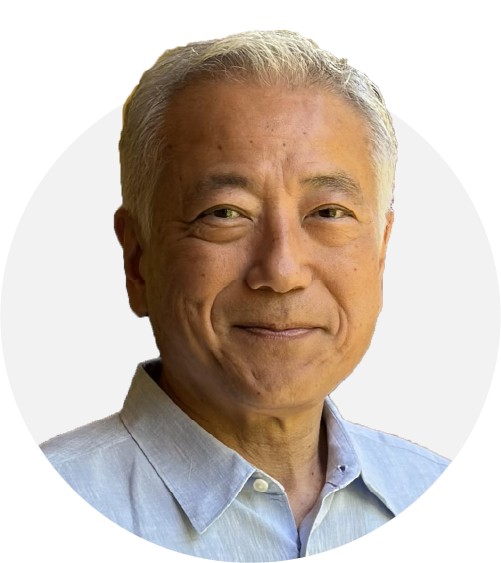
Masaru Sakamoto is a Partner at Benhamou Global Ventures, a Silicon Valley firm with a Kyoto office. What the US-Japan venture bridge is actually made of.
Benhamou Global Ventures names five core hubs: the United States, France, Israel, India and Japan (BGV). The first four are ordinary places for a Silicon Valley firm to source deal flow. Most American firms that say they cover Japan cover it from a conference badge and a quarterly trip, so counting it as a core hub is not ordinary.
Masaru Sakamoto, who goes by Mas, is a Partner at that firm and spoke at Tech for Impact Summit 2026 in Tokyo (speaker profile). His work sits on the corridor between Silicon Valley and Japan, and his career is a fair description of what that corridor is actually made of.
The firm behind him
Eric Benhamou founded BGV in 2004 and is its Founder and General Partner. He is a former chief executive of 3Com and of Palm, with more than 40 years in the IT industry, 8 IPOs and 37 acquisitions behind him, and seats on more than 25 boards, 11 of them publicly traded companies. He has taught entrepreneurship at INSEAD, Stanford and IDC Herzliya (BGV team).
The firm invests early in AI-native enterprise startups and calls the category it is aiming at Enterprise 5.0. It lists more than 60 portfolio companies and more than 30 exits, 12 of them IPOs (BGV).
Its self-description contains one line worth pausing on: “We are operators who have lived this journey ourselves.” That is a claim about who the partners are rather than about a market thesis, and it explains the hub list better than the thesis does.
A fund whose differentiator is that its partners have run operating businesses is selling access to specific people rather than to a screening model. A founder taking money from one should ask which partner takes the board seat and what that person has run.
From NEC to a partnership
BGV describes his job in one sentence: he “bridges BGV’s Silicon Valley platform and the Japanese technology ecosystem, supporting portfolio companies entering Japan and Japanese enterprises engaging with AI-native startups” (BGV team).
He joined BGV in 2018. Before that he spent years at NEC in leadership roles, including Group Vice President of the Solutions Business Group and Vice President of Corporate Planning and Marketing. He has served on the boards of Vidient Systems and Niteo Partners, and as a board member and Secretary of the Harvard Business School Association of Northern California. He read economics at Keio and took an MBA at Harvard Business School (speaker profile).
He is also an angel investor, in Bedrock Robotics, Invia Robotics, Marble Robot, Glydways, Mission Barns, Copado, SKUChain, LUUM, Genia and Ekso Bionics among others, and a frequent guest lecturer at Kyoto University, Aoyama Gakuin University, UC Berkeley and NYU (same source).
The NEC years supply the Japanese side of a conversation, including how a large Japanese buyer decides. The Valley years supply the other side.
What the bridge is made of
His profile also lists advisory roles and affiliations with Bay Angels, YNext Incubator, Plug & Play, and Alchemist Accelerator in collaboration with the J-Startup programme (speaker profile).
J-Startup is the Ministry of Economy, Trade and Industry’s selection programme. Companies are picked by venture capitalists, accelerators and innovation leaders, then supported by government and private-sector partners, with an explicit overseas expansion pillar delivered partly through JETRO’s Global Acceleration Hub and participation in international technology events (J-Startup, METI). Around 200 companies hold the designation.
An accelerator running a cohort in collaboration with that programme is the concrete form of the bridge. The cohort and its demo day put a Japanese founder in front of American customers who would otherwise take two years to reach, with someone in the room who can explain each side to the other. It is also where the constraint sits, because the channel carries as many companies a year as those people can personally handle.
The other end of the corridor is a policy target
Japan wrote its side of this down. The Startup Development Five-Year Plan, published by the Cabinet Secretariat in 2022, records startup investment in Japan rising from ¥360 billion in 2017 to ¥820 billion in 2021, and sets a target of a scale above ¥10 trillion in FY2027, more than ten times the 2021 figure. It further states an aim of creating 100 unicorns and 100,000 startups, defining a unicorn as an unlisted company valued above ¥100 billion (Cabinet Secretariat, PDF).
One measure in that plan speaks directly to the Silicon Valley corridor. The government ran a programme selecting 20 aspiring young founders and sending them to Silicon Valley; the plan commits to scaling that to 1,000 people over five years, and to establishing new Japanese business bases in Silicon Valley and Boston (Cabinet Secretariat, PDF).
Scaling that dispatch from 20 people to 1,000 builds a talent pipeline. It does not by itself build 1,000 relationships with American investors and customers, which is the asset that prices a Japanese round. Those relationships are held by people, and at present by a small number of them.
The session in Tokyo
At Tech for Impact Summit 2026 Sakamoto took part in a Strategy Dialogue titled “Capital Without Borders? How US, European, and Japanese Investors Are Navigating the New Geopolitics of Innovation” (session page).
The published session brief set out the subject: capital moving through the US, European and Japanese corridors under tariff negotiations and export controls, and a persistent value-quality mismatch in which Japanese startups attract lower valuations than comparable US peers holding similar intellectual property. The dialogue was invitation-only and off the record, so what follows draws only on that published brief and on public sources.
We took the underlying question apart separately in the cross-border valuation gap briefing. The short version is that government-to-government capital and a headline valuation do not settle what a Japanese founder is offered on a term sheet.
What a career like this tells a founder
US funds do not find Japanese deep tech through a screening process. They find it through people who know both sides. So the useful question to put to a cross-border investor is which of those people is on the team, and whether one of them will take the board seat.
Sakamoto’s NEC years are why a Japanese corporate partner takes the meeting, and why a US portfolio company gets useful help with a Japanese customer.
The five-year plan’s target year is FY2027. Trust between an investor and a founder takes longer than that to build, which is why someone who has worked this corridor for a decade matters more to a specific deal than the aggregate figures do.
Tech for Impact Summit 2027 is in Tokyo on 18–19 May 2027, co-hosted with the United Nations University. The people who carry companies across the US, European and Japanese corridors are the ones we want in the room. It is invitation-only, and if this is your work we would like to invite you. Join the waitlist at tech4impactsummit.com/apply.