Japan Has the World's Third-Largest Geothermal Resource and 0.3% of Its Power
Japan's 2040 outlook puts geothermal at 1-2% of the power mix against 0.3% today. The state's own programme says the binding constraints are lead time, scale, acid and drilling.
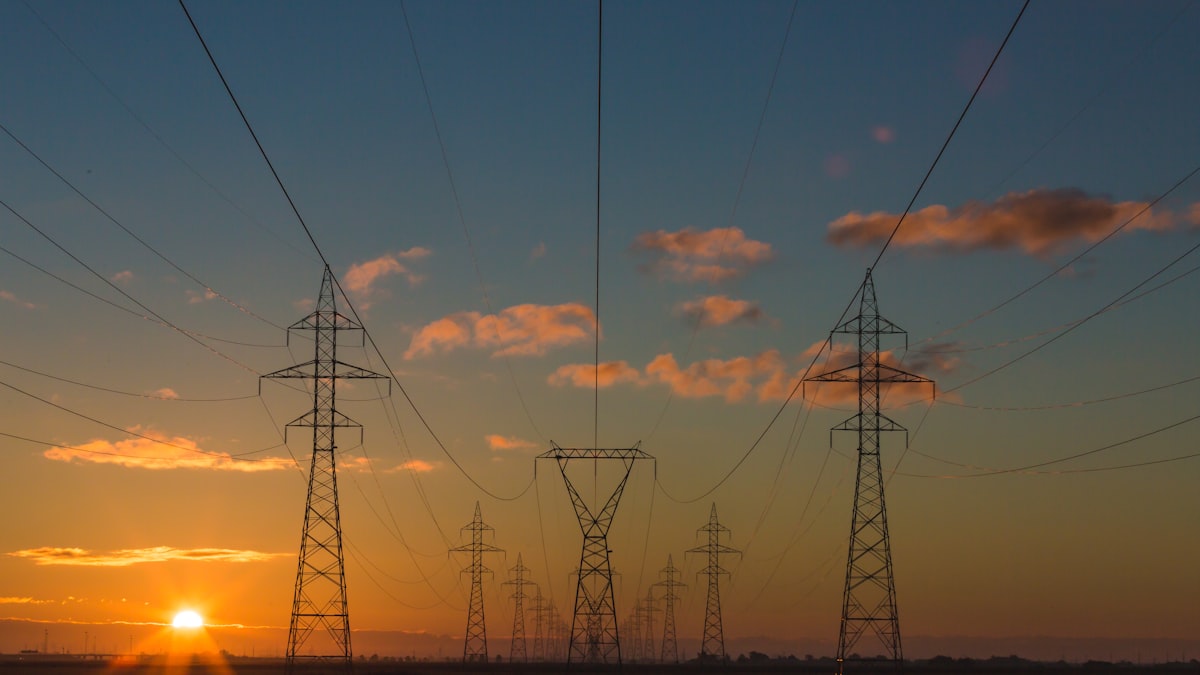
Japan has the world’s third-largest geothermal resource potential. Geothermal supplies about 0.3% of its electricity. The government’s own outlook for fiscal 2040 puts it at 1% to 2%.
That gap is not a secret the industry is keeping. It is written into the project documents of the state agency funding the work, as the reason the work exists (NEDO).
The gap, stated by the funder
NEDO’s new programme is 地熱ポテンシャル高度利活用技術開発, roughly “technology development for advanced use of geothermal potential”. Its opening paragraph makes the case plainly: geothermal contributes to decarbonisation and energy security, and Japan is well suited to it, holding 世界第3位の地熱資源ポテンシャル, the world’s third-largest geothermal resource potential.
Then it says why that has not translated into generation. The named obstacles are the high risk and cost of development, long lead times, and constraints on where development is permitted at all. The document’s phrase is 開発リスク・コストの高さ、リードタイムの長さ、開発適地の制約.
Against the Seventh Strategic Energy Plan it is explicit about the arithmetic: the plan’s fiscal 2040 supply-demand outlook carries geothermal at 1% to 2% of the power mix, the present figure is 0.3%, and the programme exists to close part of that distance.
What the money is actually buying
The programme runs from fiscal 2026 to fiscal 2030, with ¥620 million budgeted for fiscal 2026. Support is a mix of commissioned research and subsidy at up to two-thirds. It replaces a predecessor programme that ran from fiscal 2021 to fiscal 2025.
Four work items sit under it, and the output targets are unusually concrete for an R&D plan:
Environmental process. Standardise good practice and optimise the whole path from site formation to environmental assessment, including AI and IoT methods to speed up flora and fauna surveys. The target is to cut development lead time by six months.
Scale. Analyse silica scale structure at the nanometre level, identify what drives its formation and growth, and propose countermeasures. Scale is common enough in operation that one of the programme’s fiscal 2040 outcome targets is simply a lower number of scale incidents.
Acidic fluids. Develop materials that handle acidic geothermal fluids at less than half the cost of existing acid-resistant materials.
Supercritical geothermal. Build resource-assessment methods for supercritical geothermal at new candidate sites, then plan flow tests and run economic evaluation.
Read the list again and notice what is not on it. There is no item for finding heat. The constraints the state is paying to remove are permitting time, mineral deposition, metallurgy and drilling economics. The resource is not in question.
The outcome targets are dated to fiscal 2040 and follow the same logic: more new development sites per year as the lead time falls, fewer scale incidents, higher generating capacity once acidic fluid stops disqualifying sites, and supercritical geothermal realised.
Permitting is the item with a number on it
The first work item deserves a second look, because it is the one with a measurable effect on how many projects exist.
Its content is not a technology in the usual sense. It is standardisation: take the cases that went well, work out what made them go well, and optimise the whole process from forming a site through environmental assessment into a published guideline. Sitting underneath that is a narrower piece of engineering, using AI and IoT to make the flora and fauna surveys that feed an environmental assessment faster and less labour-intensive.
Note where the programme puts its lead-time target. Not on drilling, not on construction, but on the environmental process, which tells you where it believes the time goes. A six-month cut sounds modest against a development cycle measured in years. What makes it worth the budget line is that it is the only lever in the programme that acts on throughput. Better alloys raise the number of sites that are technically viable. A shorter assessment raises the number of projects that can be started in a year, which is the quantity the fiscal 2040 target is actually a function of.
It is also the item that reaches outside METI’s own house. The programme commits to exchanging information with the Ministry of the Environment and other related bodies, which is the obvious reading of a plan whose main schedule risk is an environmental process the energy ministry does not control.
The programme is also a recruitment exercise
The outcome section carries a line that is easy to skim past. During the project period, not only at the end of it, the programme will publish results to the people who would use them, and will coordinate with JOGMEC’s own schemes to put information in front of geothermal developers in order to encourage them to enter the market.
That is an admission about the shape of the problem. A technology programme that expected a queue of developers waiting on better alloys would not need a recruitment plan attached. The constraint being managed is the number of firms willing to be in this business at all, which is consistent with everything else in the document: the state leading the risky drilling, the Green Innovation Fund pulling private companies toward next-generation methods, and the council worrying about whether Japan has the engineers.
The state takes the drilling risk
Alongside the research sits a policy package, the 地熱開発加速化パッケージ. Its mechanism matters more than its name: in areas where development risk is high, the state and JOGMEC lead the projects themselves, rather than waiting for a developer to carry exploration risk that no balance sheet wants.
This is the standard answer to the geothermal financing problem. A geothermal project spends heavily on drilling before anyone knows what the reservoir will yield, and that spending is unfinanceable on normal terms. Moving the early wells onto a state agency converts a risk nobody will price into one somebody will.
For next-generation geothermal the package instead aims to pull private companies in, with the Green Innovation Fund running alongside.
The part nobody has decided
A public-private council, the 次世代型地熱推進官民協議会, has been working toward a roadmap. The summary of its second meeting, held at METI on 15 July 2025, records a question that has not been answered (Agency for Natural Resources and Energy).
Of the 1% to 2% in the Seventh Strategic Energy Plan, how much is conventional geothermal and how much is next-generation? And how much next-generation deployment is being assumed? The council’s own minute says this needs to be sorted out. A target exists; its composition does not.
Three further points from the same meeting are worth holding onto.
Members asked to re-emphasise geothermal’s role toward 2040 as a stable, clean source that can serve as baseload. That is the council’s framing, and it is the reason geothermal keeps returning to Japanese energy planning despite thirty years of slow progress.
On cost, the minute says the direction of drilling-cost reduction needs more detailed discussion grounded in current conditions, and that technology development has to come first: prove the technology, then let competition between operators bring the generation cost down, with policy support designed around that sequence.
On capability, members noted that Japanese geothermal relies heavily on overseas technology, much as oil does. Domestic demonstration will need not only engineer training and bringing technology in-house, but also arrangements that let foreign technology be used in Japan at all.
And on law, the minute says the three next-generation geothermal technologies differ in maturity and uncertainty, so the roadmap must treat them separately, and 法整備, the building of a legal framework, has to be considered for each. The statutory regime for next-generation geothermal is not written yet.
What to watch
The roadmap is the first thing. Until the council splits the 1% to 2% between conventional and next-generation, nobody can size either market, and the FY2040 number is a direction rather than a plan.
The second is the legal framework. Supercritical and other next-generation approaches reach depths and temperatures that existing permitting was not written for. A technology can be proven and still have nowhere to operate.
The third is the lead-time target. Six months off the environmental process sounds modest next to a development cycle measured in years. It is the only item in the programme that changes how many projects can start in a given year, which makes it the one to measure.
Japan’s geothermal problem has never been the heat. It is that everything around the heat, the permitting, the metallurgy, the chemistry and the cost of the first wells, has been harder than the resource maps suggest. The state has now written down which of those it intends to pay to fix, and by how much.
Japan’s geothermal resource has been mapped for decades and is still largely unbuilt. Tech for Impact Summit 2027 is in Tokyo on 18-19 May 2027, co-hosted with the United Nations University. It is invitation-only. If this is your work, join the waitlist at tech4impactsummit.com/apply.