Germany's Carbon Contracts for Difference: 21 Bids In, 15 Signed Last Time, and Not a Steelworks Among Them
Germany's second Klimaschutzverträge auction closed on 9 September 2026 with 21 bids. The first round put 15 contracts and about 2.8 billion euros into paper mills, brickworks, glass and sugar. Steel got its money somewhere else entirely.
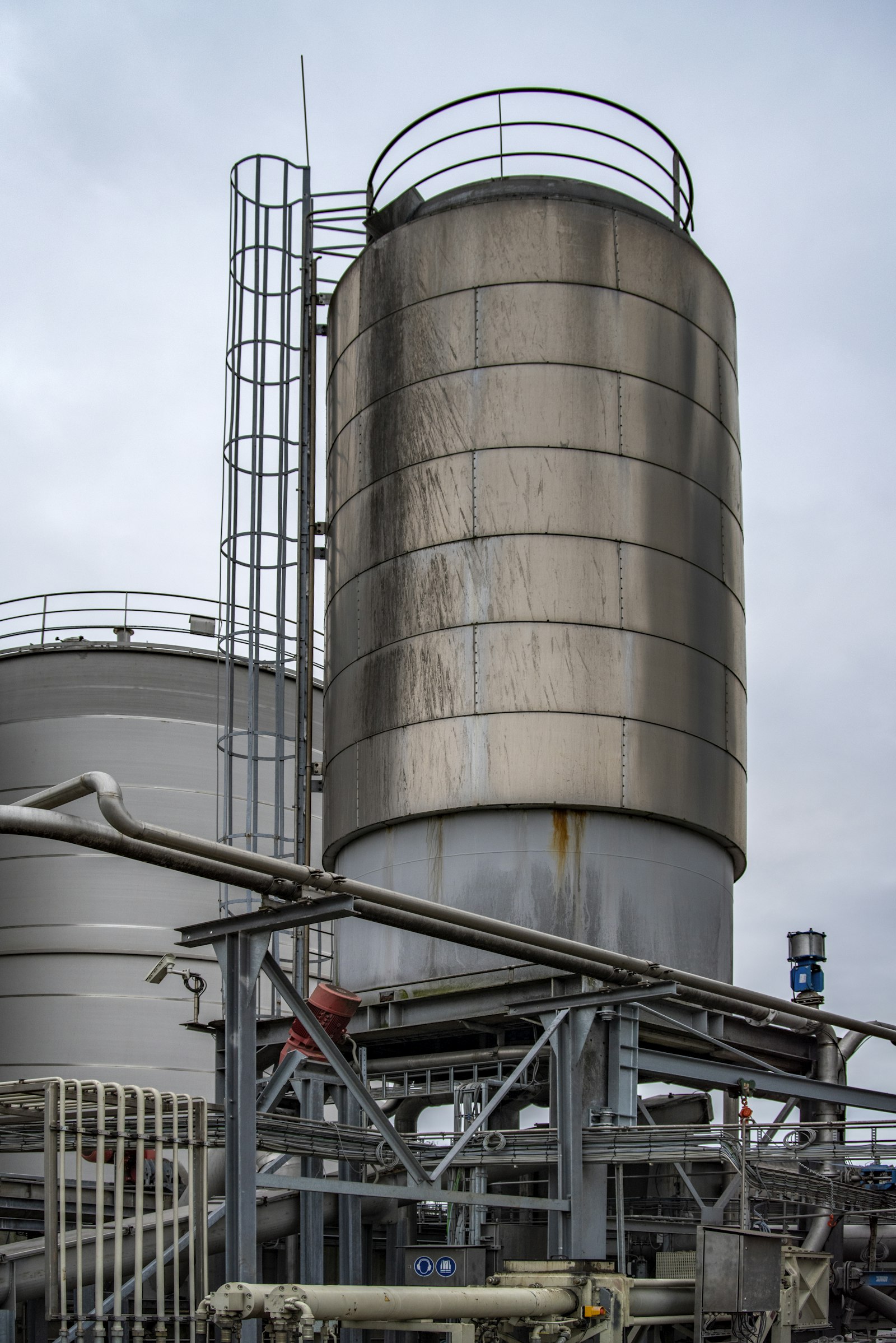
On 9 September 2026 the submission window for Germany’s second round of Klimaschutzverträge closed. Twenty-one bids went in.
The programme’s own site records both facts in one line: “Die Einreichungsfrist für das Gebotsverfahren 2026 endete mit Ablauf des 9. September 2026” and “Insgesamt wurden 21 Gebote eingereicht” (co2-differenzvertraege.info). The round had opened on 5 May. The original deadline was 7 September and was extended by two days.
Twenty-one is a small number for an instrument meant to decarbonise German industry. It is four more than the first round drew in 2024.
What the instrument actually does
A Klimaschutzvertrag is a carbon contract for difference. The state agrees to pay a company the gap between what a low-carbon production process costs and what the conventional one costs, for a fixed period. If the carbon price rises far enough that the clean process becomes cheaper, the payments reverse and the company pays the state back.
The allocation is an auction. Projects bid a price, and the cheapest tonnes win until the money runs out. The auction therefore prices abatement in each sector instead of leaving a ministry to estimate it.
Only companies that went through the preparatory procedure in the previous year were allowed to bid in the 2026 round. That pre-qualification step is why the bid count is small and why it is a reasonable proxy for serious intent. Nobody submits a bid in September for a plant they started thinking about in August.
The first round, and the list nobody talks about
On 15 October 2024 the federal economics ministry handed over the first contracts. Of the 17 companies that bid, 15 received an award, for a maximum funding volume of around 2.8 billion euros, against emissions savings the ministry put at up to 17 million tonnes of CO2 equivalent over the following 15 years (programme announcement).
The awards went, in the ministry’s own order, to BASF, DREWSEN Spezialpapiere, H&R Chemisch-Pharmazeutische Spezialitäten, Kimberly-Clark, Knauf Insulation, Nordenham Metall, Papierfabrik Adolf Jass, Saint-Gobain Glass Deutschland, Saint-Gobain ISOVER G+H, Schmiedewerke Gröditz, Schumacher Packaging, Südzucker, tesa Werk Hamburg, Wienerberger, and Ziegel- und Klinkerwerke Janinhoff.
One chemicals major, then two paper mills, a packaging manufacturer, a tissue plant, two glass and insulation plants from the same French group, a zinc smelter, a forging works, a sugar producer, an adhesive tape factory and two brickworks.
No primary steelmaker. No cement. No refinery.
The auction is built to produce that result. These are process heat problems: kilns, dryers, evaporators and furnaces running at a few hundred degrees, where an electric boiler or a heat pump can replace gas today at a cost per tonne a competitive bid can actually express. Steel and cement abatement cost far more per tonne in 2024 than anything on this list, so in an auction sorted by price they lose.
Where the steel money went instead
Germany did fund steel. It did it outside this instrument, through direct grants with their own state aid approvals.
Thyssenkrupp’s direct reduction project at Duisburg received roughly 2 billion euros in combined federal and state support, which IG Metall breaks down as 1.3 billion from the federal government and 700 million from North Rhine-Westphalia (IG Metall). Salzgitter’s SALCOS project is recorded by the IEA as a direct grant of 700 million federal and 300 million state funding (IEA policy database), and in February 2026 the government added about 322 million euros more (SteelOrbis).
So the country ran two systems at once. An auction that pays the market-clearing price for abatement wherever it is cheapest, and negotiated grants for a handful of assets treated as too strategically important to lose on price. The contract list above is what the auction bought. It is not the whole of German industrial decarbonisation spending.
What changed for the round that just closed
The 2026 round widened the gate in ways that matter to anyone selling equipment into German industry.
Technologies for capturing, using and storing greenhouse gases are now eligible, which the programme states plainly: “Förderfähig sind nun beispielsweise Technologien zum Abscheiden, Nutzen und Speichern von Treibhausgasen (CCU/CCS)” (current round). Pure industrial steam projects qualify, as does partial funding of a production line rather than all of it. The law firm Gleiss Lutz, summarising the changes when the preparatory procedure opened, also points to wider tolerances on emission reductions during the contract term and to access for medium-sized companies with smaller plants, which the first round largely did not reach (Gleiss Lutz).
Two things are worth flagging as not established. The programme’s own pages for this round do not state a budget; published summaries from law firms and chambers of commerce have given figures between 5 and 6 billion euros, and they do not agree. The revised emission reduction milestones are described on the official page as adjusted but are not quantified there, and secondary accounts differ on both the percentages and the years. Neither number should be quoted from this article, because we could not confirm either at source.
What is on the record: the preparatory procedure for the next round opened on 19 October 2026 and runs until 14 December 2026. A company that wants to bid in 2027 has to be in that process before Christmas.
Why this matters from Tokyo
Japan is running the same instrument on a larger clock. The Hydrogen Society Promotion Act created a price-gap support scheme worth 3 trillion yen over fifteen years from the start of supply, and it has begun paying out, with JERA certified as a supplier in December 2025 (our briefing).
Both countries have landed on the same instrument: a contract that makes the clean version of an existing process bankable for fifteen years. What the two have signed with each other is a different kind of document. The EU’s first Green Alliance was with Japan, in May 2021. The agreements since then cover hydrogen research between agencies, battery recycling standards and climate dialogue. None of them names a European supplier delivering equipment into a Japanese project (Japan and Europe’s green corridor).
Germany’s 2024 round produced fifteen named companies, a price per tonne set by competitive bid, and a counterparty on the hook for fifteen years. The German brickworks and the Japanese chemical plant have the same problem, which is heat they cannot make today without gas. Two governments are solving it separately, five years into a partnership with no supply contract in it.
The money exists on both sides. What is still open is whether a supplier in Munich can get inside a Japanese price-gap contract, and a supplier in Osaka inside a German one, before the current rounds close.
At the Summit
The Japan to Europe green corridor is our flagship Strategy Dialogue track for Tech for Impact Summit 2027, co-hosted by the United Nations University and held at its headquarters in Shibuya, Tokyo on 18 and 19 May 2027. The sessions put European suppliers in front of the Japanese buyers and agencies that decide which demonstration projects get funded, and work through how a demonstration becomes a production order.
The Summit is invitation-only. If you are working on industrial heat, hydrogen, or the contracts that pay for either, you can join the waitlist at tech4impactsummit.com/apply and we will be in touch.