ミュンヘンの7つの問い:気候変動に向かう資本が、いま本当に議論していること
9月24日、ミュンヘン。7つのテーブルが、それぞれ一つの問いを持ちます。問いは事前に公開されています。並べて読むと、資本がどこで止まっているかの地図になります。
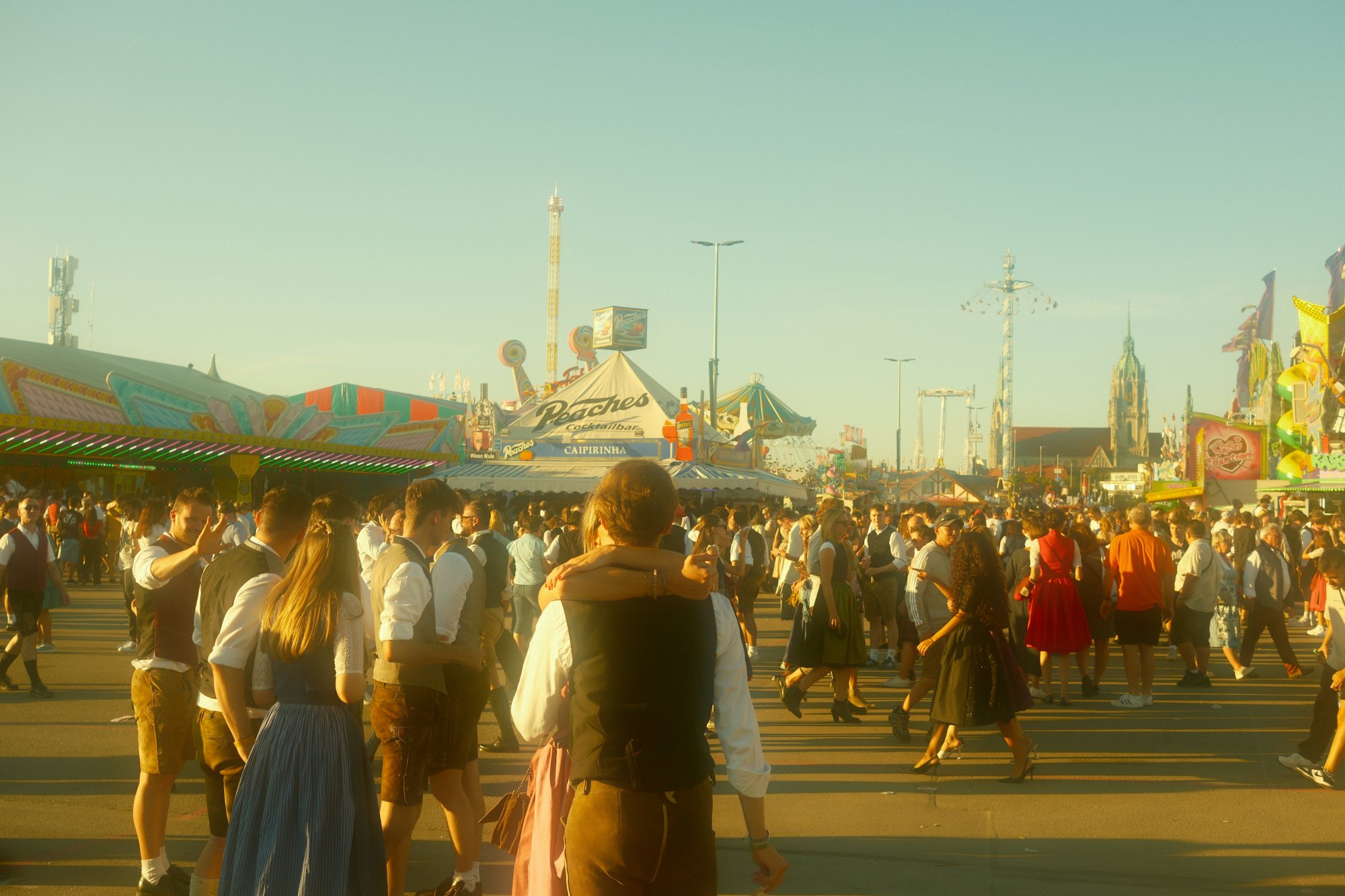
Most events publish a programme. A list of names, a list of titles, and a promise that the conversation will be excellent.
Tech for Climate at Oktoberfest publishes the questions instead. Seven tables run at once on the afternoon of 24 September in Munich, each led by a peer and carrying a single question, and every question sits on the event page before anyone arrives.
Here they are.
The seven
From interested to allocated. What actually makes private capital move into impact, and what quietly stops it?
Backing a fund, backing a deal. What does an LP actually look for before backing a fund? How does a GP’s strategy and timeline hold up against it? And when do the two co-invest in the same company?
Who can actually decarbonize a city? Munich’s companies produce roughly half its emissions. If government cannot mandate the transition, who has the power to make it happen?
From carbon and nature claims to investable climate assets. Carbon markets, biodiversity outcomes and regenerative agriculture keep being framed as investable. What does it take to make one financeable at scale?
From pilot to purchase order, in Europe and Asia. Asia’s corporates have to decarbonize. Europe’s startups have the technology. Yet corporates in both regions run many pilots and sign few purchase orders. What gets a startup from pilot to paying contract, across a border as well as an org chart?
Who pays to rebuild an industry? Mobility has to re-tool while its margins are under pressure. Who finances that, and what does it mean for everyone selling into it?
When sustainability pays. Take away the reporting requirement. Where has sustainability already won customers, cut costs or protected revenue?
Where the money stalls
The first table is the plainest. Plenty of family offices say they’re interested in impact. Far fewer have allocated. The table is for people who can say what stopped them, or what finally didn’t.
The Japan and Europe table starts from a mismatch. Japanese corporates have binding decarbonisation obligations and capital to deploy. European startups have the technology. Both sides run pilots, and few pilots turn into a purchase order.
Backing a fund, backing a deal and When sustainability pays look at how money actually gets committed. An LP and a fund explain what each checks before the other gets a yes. A company explains which sustainability spend paid for itself once the reporting requirement is gone. People rarely answer that honestly on a stage, so it’s a table.
No stage, no panel
There is no stage in the tent and there is no panel. Peers lead the seven tables. A guest picks a table on arrival rather than in advance, and a steward seats anyone who comes late.
Munich holds Oktoberfest, PE Insights and Bits & Pretzels in the same week. The house rules for this afternoon say guests are not there to be pitched, and we hold people to that.
The afternoon runs from eleven to five. Nobody is expected to stay for all of it. Two things are anchored to a clock so a guest can plan around them, and the rest of the time is open.
The Chatham House hour
The seven tables run in a private hour, under the Chatham House rule. Nothing is written up and nothing is read out afterwards. The music in the tent stops for the whole hour, so the quietest voice at a table is still one you can hear.
A published question lets someone decide in advance whether a table is worth their afternoon. The rule is why people say something true once they sit down. An investor will tell you what did not work in their portfolio. They will not tell a microphone.
Around that hour, the day does what an Oktoberfest afternoon does. The tent opens at eleven with lunch and a band. Three fireside chats run later, two chairs and two microphones each, no moderator and no slides: one on Japan and sustainability, one on whether Europe can build a fusion plant, one on what moves private capital from intention to allocation. Between them the music comes back up.
The three firesides
The firesides carry published questions too.
The first is on Japan and sustainability. Japan has made sustainability binding for its industry, and its corporates are deciding now what to build, buy and partner on at scale, across energy and materials and the networks and data centres that carry the load. The question is what it takes for a European technology to actually get adopted there.
The second asks whether Europe can build a sun. Fusion, capital, and the race to a first power plant: who funds the attempt, and on what evidence.
The third asks what moves private capital from intention to allocation, and what quietly stops it. That is the same question the first table of the private hour takes, asked this time in front of the whole tent.
The practical part
Tech for Climate at Oktoberfest is on Thursday 24 September 2026, in the Metzger Stubn tent in Munich, from 11:00 to 17:00. It is co-hosted by Tech for Impact and UnternehmerTUM, the centre for innovation and business creation at the Technical University of Munich, under the auspices of the Consulate-General of Japan in Munich.
The room is built around the capital side: family offices, funds of funds, private investors and corporates, with a strong Japanese corporate presence, and a small hand-picked group of VCs and founders. It is by invitation, and the guest list is read by hand.
If one of the seven is the question you have been arguing about internally, that is the reason to come. You can request an invitation and tell us which table you would want.
For Tokyo, the Tech for Impact Summit is on 18 and 19 May 2027, co-hosted by the United Nations University, and the waitlist is open.