日本は32か国と二国間クレジット協定を結んでいる。うち8か国には案件が一件もない
二国間クレジット制度(JCM)は2026年7月14日時点で32のパートナー国、候補を含め303件の案件に広がっている。うち4か国が195件を占め、8か国は一件もない。政府目標は2030年度までに累積約1億t-CO2であり、クレジットの供給先としてGX-ETSが明記されている。
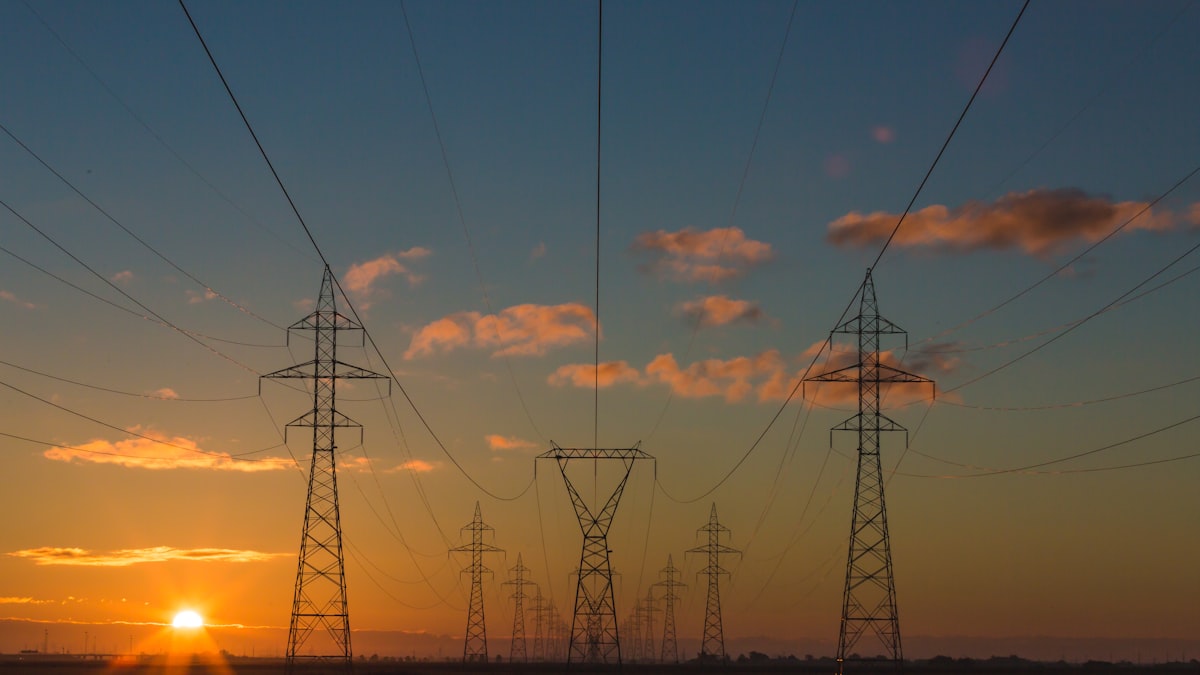
A Japanese company pays for a geothermal plant in the Philippines or a waste heat recovery unit in Thailand. The plant cuts emissions. The company does not receive credits for all of the cut.
Japan’s Joint Crediting Mechanism splits every credit between two countries. The scheme’s own description says so.
What the mechanism actually promises
The JCM is a bilateral scheme. Japan funds or supplies decarbonising technology in a partner country, the reduction is measured against a baseline, and credits are issued. The Ministry of the Environment’s own description of the split is worth reading as written:
Part of JCM credits issued from emission reductions and removals will be used towards the achievement of Japan’s NDC and the rest of the said JCM credits contributes to the achievement of the partner country’s NDC, while ensuring avoidance of double counting consistent with the guidance on Article 6.2 of the Paris Agreement.
One tonne of reduction is divided between the two countries, and the partner country applies a corresponding adjustment for whatever is issued to Japan by adding that amount back to its own reported emissions, which is what stops the tonne being counted twice.
The scale Japan wants from this is in the Plan for Global Warming Countermeasures, a Cabinet decision of February 2025: roughly 100 million t-CO2 of accumulated international emission reductions and removals by FY2030, and roughly 200 million by FY2040, through public and private collaboration.
Among the economic aims listed for the JCM is to “provide eligible credits for Japan’s domestic emissions trading system, GX-ETS”. GX-ETS became mandatory for large emitters on 1 April 2026, so the mechanism now feeds a domestic compliance market as well as Japan’s own NDC accounting.
32 countries, 303 projects, as of 14 July 2026
Japan has signed memoranda with 32 partner countries. Oman is the 32nd, by order of signing. The list runs from Mongolia and Bangladesh through Viet Nam, Indonesia and Thailand to Kenya, Tunisia, Senegal, Chile, Mexico, Ukraine, Kazakhstan and India.
Across those 32 countries there are 303 JCM projects, including candidates.
Indonesia has 62. Thailand has 59. Viet Nam has 51. The Philippines has 23. Those four countries hold 195 of the 303.
Then there is the other end of the same list. Eight partner countries carry no project count at all: Azerbaijan, Uzbekistan, the United Arab Emirates, Ukraine, Ethiopia, Tanzania, India and Oman. A signed memorandum, and nothing built under it yet.
The remaining twenty countries hold between one and seventeen projects each. Chile has 17, Mongolia 12, Cambodia 11, Myanmar 8. Georgia, Papua New Guinea, the Kyrgyz Republic and Kazakhstan have one apiece.
Most of what exists sits in four Southeast Asian economies where Japanese industrial presence was already deep before the credits existed.
Why the credit yield is conservative by design
There is a second reason the arithmetic is harder than the headline target suggests, and it sits in how the baseline is set.
Credits are the difference between reference emissions and actual project emissions. Reference emissions are not business as usual. They are set below it, and the scheme states the test the level has to meet: it should be set so that even after the partner country applies the corresponding adjustment for the credits issued to Japan, the project still contributes to the partner country’s NDC.
The partner has to come out ahead after giving Japan its share. The baseline is therefore pushed down until that holds. Every project is built to under-credit relative to the physical reduction, deliberately, so that both NDCs can be served by one plant.
A portfolio of JCM projects therefore yields fewer tonnes than its project count suggests, and 100 million tonnes by FY2030 is a demanding number.
What a signed memorandum is worth
Thirty-two countries have signed a memorandum and twenty-four of them have at least one project, and the difference between those two numbers is what tells you what a signing actually buys.
A memorandum establishes the institutional plumbing. A joint committee, approved methodologies, a registry, third party entities to validate and verify. None of that produces a tonne. The tonne needs a Japanese company with a balance sheet, a local partner with a site, a technology that is cheaper than the incumbent, and a grid or an offtaker willing to take the output.
India signed. India has no projects listed. India is also the largest potential source of exactly the kind of reduction the scheme is built for. The constraint there is not the agreement.
This is the same pattern that shows up across Asian climate policy at the moment. The ASEAN Power Grid has signed interconnection agreements and far less flowing electricity. Japan’s hydrogen support scheme has a budget and is waiting on buyers. Announced capacity and operating capacity have come apart in several of these programmes, and each one is held up by a different link.
For the JCM, the missing link is project origination in the countries that signed most recently. Twenty-four of the thirty-two have at least one project. Getting the other eight to one is a different kind of work from signing the ninth, tenth and eleventh memorandum.
What this means if you are buying or building
If you are a Japanese emitter looking at GX-ETS compliance, the JCM is now in your planning, and the thing to understand about it is lead time. A project reaches credit issuance after methodology approval, construction, operation and verification. The credits available for a compliance year were decided by investment choices made several years earlier. Nothing you commit to this quarter helps you this fiscal year.
If you are a project developer in a partner country, the concentration is your opportunity. Fifty-nine projects in Thailand means the methodologies, the verifiers and the Japanese counterparties already exist there and are hard to displace. One project in Kazakhstan, or none in Tanzania, means the scheme is open and the paperwork path is built but nobody has walked it.
If you are investing in either, the number to watch is not the count of partner countries. It is projects per country in the eight that have none, because that is the only place the mechanism can still grow in a way that moves the FY2030 figure.
What policy cannot originate
Japan has spent a decade building the diplomatic layer of this, and it works. Thirty-two countries, a registry, approved methodologies, an Article 6.2 accounting treatment that most jurisdictions are still arguing about. That is real infrastructure and it was not easy.
It does not originate projects, and a project only begins when a specific company decides it wants a specific asset at a specific site in a partner country.
Tech for Impact Summit 2027 is co-hosted by the United Nations University in Tokyo on 18 and 19 May 2027, an invitation-only gathering of leaders across business, policy and culture working on technology against the hardest problems. Cross-border climate finance in Asia, and where the projects actually come from, is on the agenda.