日本のCCSは9件、2030年に年600万〜1200万トン。うち4件は国外に貯留する。
日本はCO2を地下に貯留する権利を法制化し、それを使う9件のプロジェクトを選定した。国内貯留が5件、アジア・大洋州での貯留が4件。制約は回収技術ではなく、越境輸送と受入国の許認可、そして誰が貯留費用を負担するのかという未解決の問いに移っている。
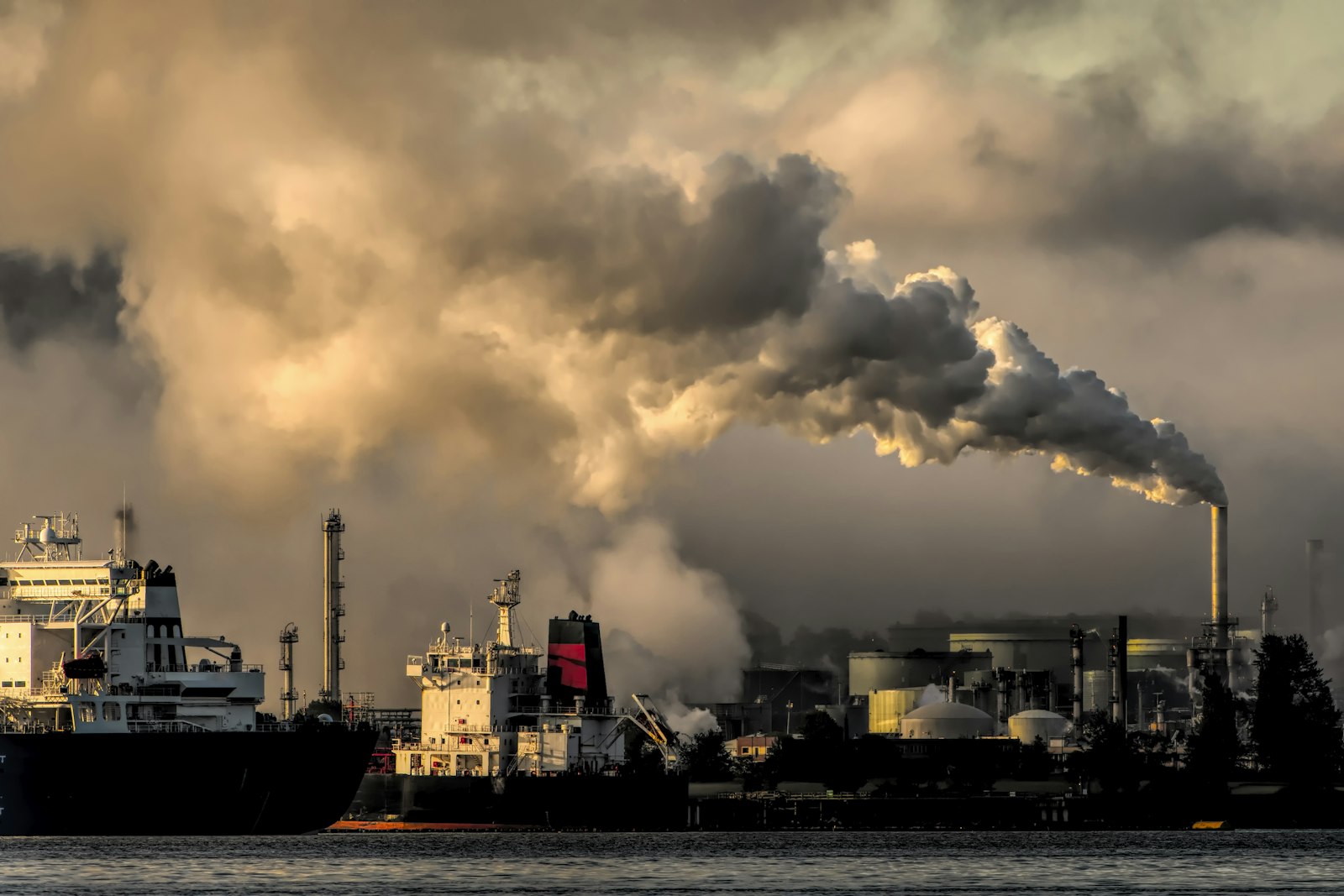
In July 2024, JOGMEC selected nine “Advanced CCS Projects” — five that store carbon dioxide in Japan and four that store it in Asia and Oceania. The nine together aim at roughly 20 million tonnes per annum, against a government target of 6 to 12 Mtpa of CO2 storage by 2030 (JOGMEC).
Four of the nine store outside Japan. That is the fact that decides which problems the programme has to solve.
What the law actually created
In May 2024 the National Diet passed the Act on Carbon Dioxide Storage Business, Act No. 38 of 2024, usually shortened to the CCS Business Act. It does something more specific than authorise a technology. It creates storage rights and a licensing system administered by METI, with the Ministry of the Environment consenting where the reservoir is under the seabed (Clifford Chance).
The end-of-life provisions are the ones to read before modelling anything. Continuous monitoring for leakage is required until the site is closed and JOGMEC takes over the storage rights from the operator. Closure itself is a four-step process: the operator prepares a closure plan, obtains METI approval for it, executes it, and only then, after a period set by ordinance, may transfer the rights with METI’s approval (Clifford Chance, same briefing).
What does not transfer is the money. The operator remains liable on a strict-liability basis for damage caused by leakage — without any finding of negligence — even after the site is closed and the rights have gone to JOGMEC (Clifford Chance, same briefing). So the state takes over the monitoring, and the operator keeps the tail. Any model that assumes the transfer to JOGMEC ends the exposure is reading the wrong half of the provision.
The Act was not fully in force at the point it was written up. As of 31 October 2024 it had only been partially enacted, with METI and MOE ordinances still to be passed before full enactment (Clifford Chance, same briefing). Several of the numbers the regime turns on, including the post-injection period before rights can be transferred, live in those ordinances rather than in the statute.
The Act has critics. FoE Japan has argued publicly that the framework advances CCS as a route to prolonging fossil fuel combustion and that it shifts long-term risk onto the public (FoE Japan). The strict-liability tail is a real answer to part of that objection, and not to the part about what CCS is used to justify.
The arithmetic of the portfolio
Nine projects aiming at about 20 Mtpa sit against a 2030 target of 6 to 12 Mtpa. The portfolio is roughly twice the size of the goal it serves.
We read that as an allowance for failure. Storage projects fall over on subsurface characterisation, on permitting and on offtake, so selecting exactly enough to hit the target would miss it. The 20 Mtpa figure is not a forecast. The 6 to 12 Mtpa band is the number the policy is managing to.
The band is also wide, with the top double the bottom, because the outcome still depends on decisions nobody has taken.
METI’s long-term work puts annual storage at 120 to 240 million tonnes by 2050 (Watson Farley & Williams), ten to twenty times the 2030 band. The nine projects are the pilot for that.
Why storing abroad changes the problem
The nine projects span electric power, oil refining, steel, chemicals, paper and pulp, and cement, sited in Hokkaido, Kanto, Chubu, Kinki, Setouchi and Kyushu (JOGMEC). Those are coastal industrial clusters, which is why the four overseas projects are structured around shipping rather than pipelines.
- The receiving jurisdiction has to want it, and has to have its own storage law, its own liability rules and its own permitting body. Japan can legislate a storage right inside Japan. It cannot legislate one in a partner country.
- Exporting CO2 for sub-seabed storage requires a bilateral agreement under the 2009 amendment to the London Protocol. Japan is negotiating those agreements with potential importing countries, and Clifford Chance expects signing them to be what unlocks cross-border projects beyond the nine already selected (Clifford Chance, same briefing). JOGMEC has published a handbook on the same problem (JOGMEC).
- The offtake is a foreign counterparty’s balance sheet. A Japanese steelmaker capturing CO2 in Setouchi and storing it overseas has a multi-decade dependency on a company and a regulator in another country.
Malaysia is the clearest worked example, and one of the nine projects stores there (Clifford Chance, same briefing). JOGMEC, METI and PETRONAS signed a Memorandum of Cooperation at the third Asia CCUS Network Forum in Hiroshima on 27 September 2023, and its stated purpose is to promote discussions on cross-border CO2 transport and storage (JOGMEC). A memorandum to promote discussions is not a treaty permitting export.
Underneath that sits a question with no published answer. If a Japanese refiner captures carbon dioxide in Kansai and a Malaysian operator injects it in Malaysian waters, one of the two national inventories records the reduction. Which one decides whether the Japanese emitter can count the tonne against anything at home. Three years after the memorandum we have found no published agreement settling it, and a project cannot be financed on a tonne whose ownership is undecided.
Japan’s hydrogen and ammonia plans run on the same import logistics, and we covered them in Japan’s hydrogen bet.
The question the programme does not answer
CCS has no natural buyer. The product is an emission that did not happen, and that has a price only where emissions are priced.
Japan does now have that something. The GX-ETS became mandatory, which puts a price signal underneath abatement for the first time, and we covered what changed in Japan’s GX-ETS went mandatory. But an emissions price only funds CCS if it clears the full cost of capture, transport, injection and monitoring, and there is no published Japanese carbon price at which the nine projects are economic without support.
Green steel has the same problem, and we wrote about it in Japan’s green steel problem is on the demand side. The technology exists there too. The cost premium is what stops it moving.
What it means if you are building or funding here
Price the strict-liability tail, and price it separately from the monitoring. The transfer to JOGMEC ends the operator’s monitoring duty and not its exposure to leakage damage, and that residual sits on the balance sheet indefinitely. For the four projects storing abroad, neither half of that arrangement applies: the host country’s own liability rules do, and those are what to diligence.
Capture pilots get announced often and prove little. Storage is the step the Act was written to enable, so the licences issued under it are the disclosure worth tracking.
The thinner part of the market is transport. Liquefaction, marine loading, ship design and CO2 quality specification sit between nine funded projects and their storage sites, and fewer companies work on those than on capture.
An emissions price that exists and an emissions price that funds storage are different numbers. A plan that assumes they meet by 2030 should say which price it means and why.
Who pays for storage at scale still has no answer. The first storage licence issued under the Act will say more about the 6 to 12 Mtpa band than any further capture announcement.
T4IS2027 takes place in Tokyo on 18–19 May 2027, co-hosted by the United Nations University. It is invitation-only. If your work sits between a new technology and the institution that has to adopt it, you can ask for an invitation at tech4impactsummit.com/apply.