日本のブルーカーボン・クレジットは1トン82,465円。森林J-クレジットは5,000円
Jブルークレジット制度は令和7年度に52件を認証し、認証サイトは累計87となった。公募譲渡の平均取引単価は1トンあたり82,465円。同じ国交省の資料には、東京証券取引所における森林J-クレジットの価格5,000円が併記されている。
この記事の本文は英語です。 英語版を読む
A Japanese fishing cooperative restores a seagrass bed. An auditor measures the carbon. A company buys the result for about 82,465 yen a tonne.
On the Tokyo Stock Exchange that same week, a forest J-Credit changes hands for 5,000 yen.
Both figures sit on one slide from the Ministry of Land, Infrastructure, Transport and Tourism. The ministry prints them next to each other without comment. The gap is roughly sixteen times, and it is the most interesting number in Japanese carbon markets right now.
What the scheme is
The J-Blue Credit scheme is run by the Japan Blue Economy Association, a technology research association whose establishment the transport ministry authorised. It certifies CO2 absorbed by the conservation, restoration and creation of seagrass beds, tidal flats and similar habitats, and turns that absorption into a tradable credit.
The people creating the credits are not project developers in the usual sense. The ministry lists them as fishery operators, local governments, private companies, NPOs and environmental groups. The ministry is explicit about what the money is for: selling the credit secures funds for the group, which supports the continuation and revitalisation of the maintenance and conservation work.
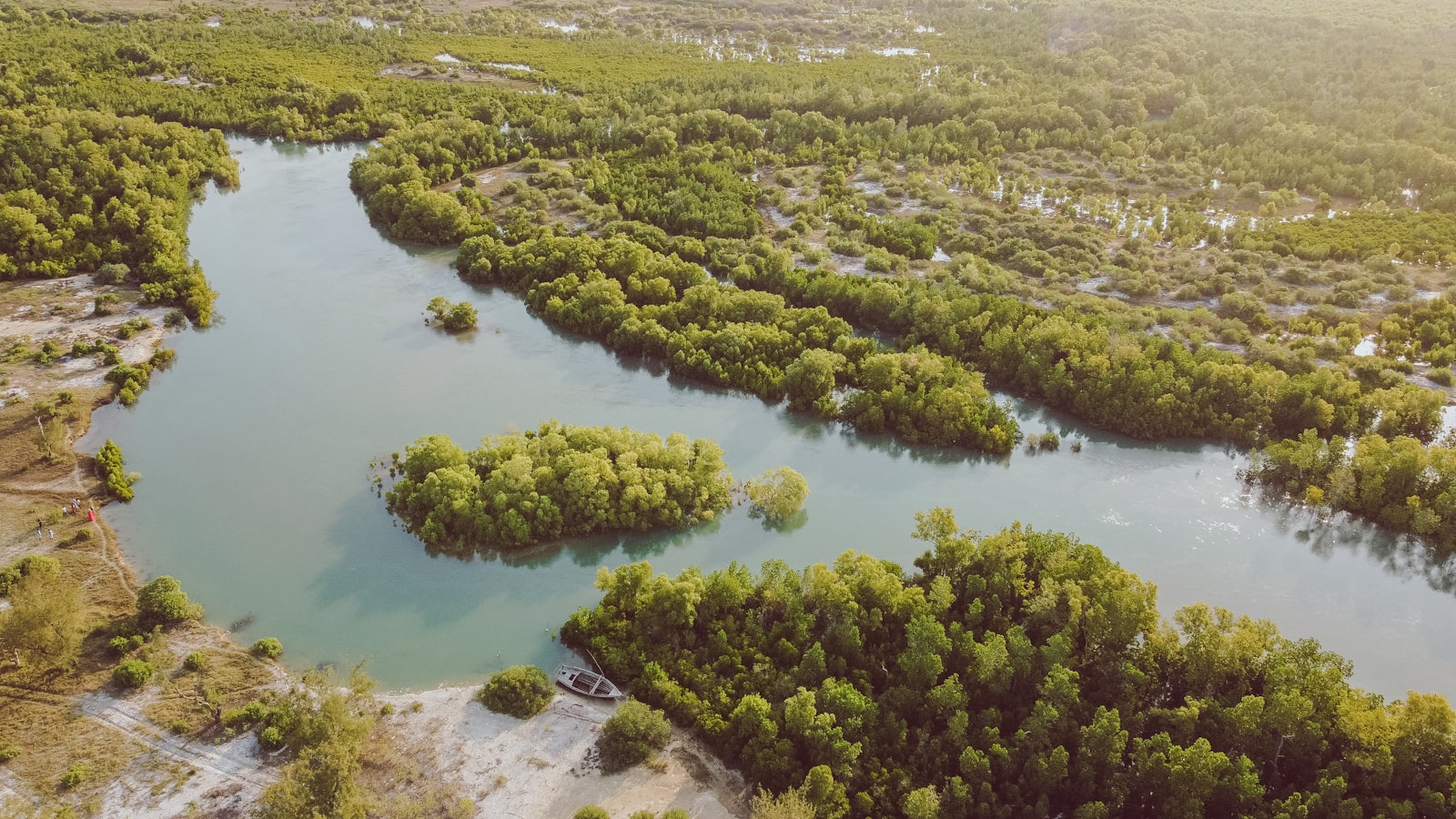
Blue carbon ecosystems, in the ministry’s definition, are seagrass beds, tidal flats and mangroves. They absorb CO2, and they also serve as spawning and nursery grounds, which is why the ministry frames the scheme as improving the marine environment and contributing to regional revitalisation through fisheries promotion and environmental education, not only as climate policy.
The scale, stated plainly
In FY2025 the association certified absorption at 52 projects. Twenty-six of those were certified for the first time. The cumulative number of sites that have ever been certified reached 87.
The ministry adds a caveat in its own footnote that is worth repeating, because it is the kind of detail that gets lost: some sites do not apply for certification every year, so the cumulative site count does not match the latest year’s project count. Eighty-seven sites have been certified at some point. Fifty-two were certified last year.
The earlier years show how new this is. The ministry’s own chart runs from FY2020: one project, then four, then 21, then 29, then 23 for FY2024 as counted in January 2025. Certified volumes over those first four years were 22.8, 80.4, 3,733.1 and 2,170.3 t-CO2.
Open the association’s credit register, published as of 16 October 2026, and the individual entries are smaller than most people expect. A seagrass creation project at J-Power’s Wakamatsu site certified 0.1 t-CO2 for one period and 4.9 for another. A Hiroshima fishery cooperative project certified 2.6. A Sasebo project certified 0.8. An Itoshima wakame aquaculture project certified 1.7. The larger ones are still modest: 23.2 for an aosa nori aquaculture project in Ise-Shima, 32.5 for a Fukuoka seagrass project, 57.9 for a project at Shinojima in Aichi.
The register names the buyers too. JERA Power Yokosuka took 4.8 t-CO2 from a Yokosuka city project in June 2026. A regional television broadcaster took 2.7 t. Credits move in lots of half a tonne.
This is a market measured in tonnes, not megatonnes, and it is audited one seagrass bed at a time.
The price, and the comparison the ministry chose to print
For the FY2025 public offering round, the ministry reports transfer volume of 328.5 t-CO2, 123 purchasing companies and organisations counted cumulatively, and an average transfer price of 82,465 yen per t-CO2 before tax.
The year before, the fourth FY2023 round had moved 127.3 t-CO2 to 89 buyers at an average of 79,959 yen. So the price has held, slightly up, while volume roughly doubled.
Then the footnote. The transaction price for forest J-Credits on the Tokyo Stock Exchange was 5,000 yen at the end of FY2025.
A ministry does not usually put a competing instrument’s price on its own slide. Doing it here is a statement: the people running this scheme know their credit trades at a large multiple of the domestic alternative, and they are not hiding it.
Why a buyer pays sixteen times
Nothing in the physics justifies the gap. A tonne is a tonne.
What differs is everything attached to the tonne. The ministry’s description of the buyer’s side does not lead with offsetting. It says purchasing companies not only offset the CO2 emitted by their business activities, but also improve corporate value through CSR and public communication of regional contribution.
That is the honest account of what is being bought. The credit comes with a named place, a named fishery cooperative, a restored habitat that produces fish as well as carbon, and a local story a company can tell in the region where it operates. JERA Power Yokosuka bought Yokosuka city’s credits.
The volumes confirm it. A company serious only about offsetting would not buy 2.7 tonnes. It buys 2.7 tonnes because the relationship and the place are what it wants, and the tonne is the receipt.
The part that matters for 2026
Certified and issued J-Blue Credits, covering 54 projects cumulatively, were approved and registered as eligible carbon credits for the first phase of GX-ETS, from October 2024. Japan’s emissions trading scheme let them in.
The ministry’s FY2025 slide then carries this note: J-Blue Credits are voluntary credits, and they differ from the J-Credits that can be used in the second phase of GX-ETS beginning in 2026.
GX-ETS became mandatory for large emitters on 1 April 2026. So the instrument that was admissible in the voluntary phase is flagged by the ministry as a different thing from what the compliance phase uses. A buyer who assumed continuity from one phase to the next would be assuming something the ministry’s own footnote declines to say.
This does not make the credit worthless. It makes it clear what it is. The 82,465 yen is not a compliance price. It is what Japanese corporates pay voluntarily, with no obligation pushing them, for domestic nature with co-benefits attached.
The gap between absorption and credits
One more set of figures frames the ceiling. Japan’s Plan for Global Warming Countermeasures, a Cabinet decision of February 2025, sets targets for blue carbon absorption and fixation of 1 million t-CO2 by 2035 and 2 million by 2040. The 2024 figure was 320,000 t-CO2.
Set that against a public offering round that moved 328.5 tonnes. The absorption Japan is counting toward its climate targets and the absorption that becomes a tradable, audited credit are different quantities by three orders of magnitude.
The scheme is not trying to credit all of it, and it should not. But the distance is the opportunity and the constraint at once. Every tonne that becomes a credit requires a project, an applicant, a measurement and a third-party review, for a cooperative whose main business is catching fish.
What we would ask at the table
The interesting question is not whether blue carbon scales. It is what the 82,465 yen is actually telling us.
One reading is that Japanese corporates have revealed a willingness to pay for verified local environmental outcomes far above the carbon price, and that the carbon accounting is a vehicle for something they wanted anyway. If that is right, it is a finding with reach well beyond seagrass, and well beyond Japan.
The other reading is that the price is high because the market is tiny, the supply is fragmented and the transaction is small enough that nobody optimises. Scale it and the premium compresses.
Those two readings imply opposite strategies for anyone building nature-based finance in Asia. We do not know which is correct, and the data does not yet settle it.
That is the kind of question Tech for Impact Summit 2027 is built around. Two days at the United Nations University in Tokyo, on 18 and 19 May 2027, with the people who fund, build and regulate this. Places are by invitation.
If you work on nature-based credits, ocean carbon or Japanese climate finance, you can join the waitlist at tech4impactsummit.com/apply.