Japan's ¥20tn GX Transition Bonds: What Has Landed
Japan's GX Economy Transition Bonds are a ¥20 trillion, ten-year programme. Here is what the Ministry of Finance has issued, where it went, and who repays it.
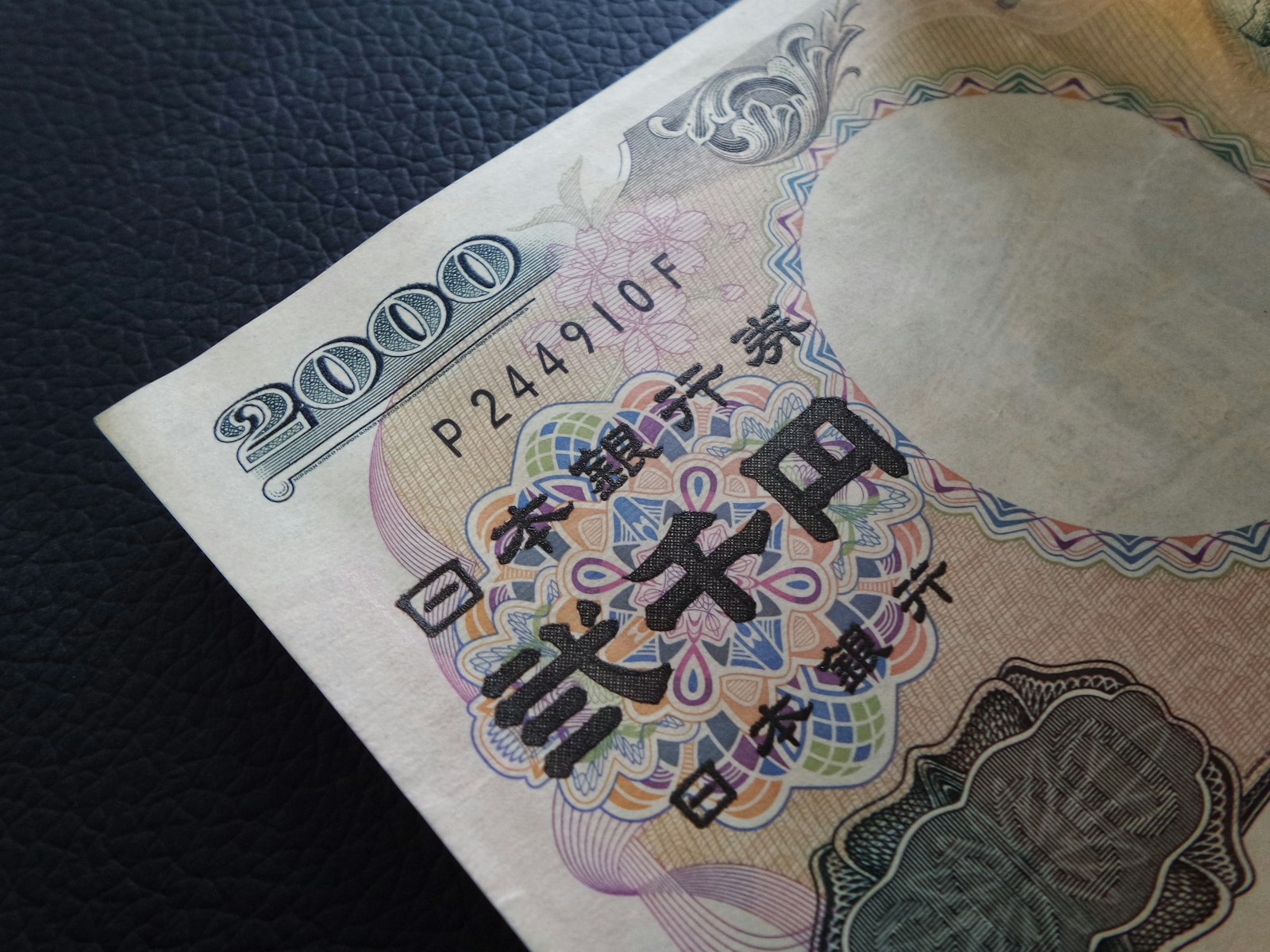
On 14 February 2024 the Japanese government auctioned a ten-year bond labelled a Japan Climate Transition Bond. It was the first sovereign transition bond issued by any country. Two and a half years later the programme behind it has issued roughly ¥3 trillion, published two allocation reports, and set out a project list for FY2026 that says more about Japanese industrial policy than any speech has.
This is a briefing on that programme: the instrument, the money that has actually moved, and the two future charges that are supposed to pay it back.
The instrument
The GX Implementation Council, chaired by the Prime Minister, adopted the Basic Policy for the Realization of GX in February 2023. The Act for Promoting a Smooth Transition to a Decarbonized Growth-Oriented Industrial Structure, known as the GX Promotion Act, was enacted in May 2023 (Ministry of Finance).
The design is upfront money now, carbon pricing later. The government issues about ¥20 trillion of GX Economy Transition Bonds over ten years from FY2023, and expects that to pull public and private GX investment past ¥150 trillion over the same decade. Japan Climate Transition Bonds are the individual securities issued under that programme, sold under a framework revised in June 2025 that MOF states is consistent with the International Capital Market Association’s Green Bond Principles and Climate Transition Bond Guidelines. The Japan Credit Rating Agency provides third-party evaluation of the reporting.
Two emissions targets sit behind all of it, set in February 2025 when the Cabinet revised the Plan for Global Warming Countermeasures, formulated the 7th Strategic Energy Plan and issued the GX2040 Vision: a 60% cut by FY2035 and 73% by FY2040.
What has actually been issued
FY2023 raised cash proceeds of ¥1,594.7 billion, across a ten-year tranche auctioned on 14 February 2024 and a five-year tranche on 27 February 2024. All of it has been allocated; the roughly ¥30 billion still unallocated at the November 2024 count was spent by the end of FY2024.
FY2024 raised ¥1,392.0 billion. As of the end of November 2025, ¥1,235.8 billion of that had been allocated and ¥156.2 billion had not, with the balance held against nuclear demonstration projects, SAF and other lines that had not yet drawn down.
Planned issuance for FY2026 is ¥1.0 trillion (MOF, Potential Allocation Projects FY2026).
The arithmetic is worth sitting with. A ¥20 trillion programme running from FY2023 to FY2032 implies an average of ¥2 trillion a year. Two completed years produced ¥2.99 trillion between them, and the FY2026 plan is half a normal year’s pace. The programme is not failing, and it is also not front-loaded. Anyone modelling Japanese climate capex off the headline number is modelling something that has not happened yet.
Where the money went
The FY2023 allocation went mostly to research and manufacturing. The Green Innovation Fund took ¥300.0 billion and a further ¥456.4 billion across two budget lines. Battery manufacturing supply chain support took ¥331.6 billion. A GX semiconductor manufacturing supply chain line took ¥152.3 billion, post-5G communications infrastructure R&D ¥75.0 billion, and the innovative GX technology programme GteX ¥49.6 billion. Household window insulation, the least glamorous item on the list, took ¥80.6 billion and ¥9.7 billion across two ministries.
FY2024 kept that shape and added industrial capacity. Batteries again drew ¥265.8 billion and ¥230.0 billion. Domestic production capacity for power semiconductors took ¥280.6 billion. The newly capitalised GX Acceleration Agency received ¥120.0 billion to provide guarantees and equity where private financiers will not. Insulating windows took another ¥98.6 billion, high-efficiency water heaters ¥56.0 billion, and a deep-tech startup support programme in the GX field ¥41.0 billion.
Across both years, most of the money went into manufacturing capacity. Batteries and semiconductors together took more than a quarter of it.
The FY2026 list is a different document
MOF publishes a provisional list of candidate projects before each fiscal year. The FY2026 list is the clearest statement yet of what Japan means by GX.
The largest single line is ¥387.3 billion for a project to develop multimodal foundation models targeting AI robotics and physical AI. That is roughly thirty-nine times the ¥10 billion for sustainable aviation fuel, and fifty-five times the ¥7.0 billion for perovskite solar cell social-implementation models. Fast reactor and high-temperature gas-cooled reactor demonstration take ¥57.2 billion and ¥62.8 billion. Hydrogen gets ¥41.5 billion for hub development and ¥36.3 billion for price-gap support on hydrogen and its derivatives, the mechanism we covered in our hydrogen and ammonia briefing. Grid-scale battery storage takes ¥35 billion plus ¥8 billion from the supplementary budget, against a connection queue we have written about separately. Hard-to-abate process conversion, which is where green steel and chemicals live, takes ¥41.7 billion.
On the demand side the numbers invert. Clean energy vehicle subsidies take ¥110 billion, EV chargers ¥50 billion, insulating windows ¥112.5 billion, GX-oriented housing ¥75 billion.
Two readings of that are available and both are defensible. One is that Japan has decided compute and robotics are the binding constraint on its industrial future, and is financing them with the instrument it has. The other is that a climate-labelled bond is funding an AI programme. MOF’s framework treats these projects as eligible because they sit inside the GX Promotion Strategy, and the second-party opinion process has not objected. It is still the line an investor should read first.
Who repays it
Most coverage skips this, and it decides whether the programme is fiscally real.
The Pro-Growth Carbon Pricing Initiative phases in the charges that redeem the bonds. The emissions trading system moves to full operation in FY2026, a fossil fuel levy on suppliers arrives in FY2028, and a paid auction of allowances for power generation companies starts in FY2033.
So: spend for five years, then start charging fuel importers, then start charging generators seven years after the levy. The GX-ETS obligation that took effect on 1 April 2026 is the first link in that chain, and we have covered what it binds and when. None of the redemption revenue exists yet. It is legislated and scheduled, payable by companies and governments that are not the ones spending the money now.
Three caveats worth carrying
Nearly ¥908.7 billion of the first issuance did not fund new activity. It refinanced FY2022 spending already made through ordinary government bonds, as a transitional measure before JCTBs existed. That is disclosed plainly in the allocation report, and it means the first tranche’s headline size overstates how much fresh money entered the system in 2024.
The unallocated balance is a live number. ¥156.2 billion of FY2024 proceeds sat unspent at the end of November 2025, mostly against reactor demonstration and SAF lines. Slow drawdown in demonstration categories is the usual pattern for programmes like this, and it is where the gap between appropriated and deployed shows up first.
The repayment mechanism is a political object. A levy scheduled for FY2028 and an auction scheduled for FY2033 are both decisions a future Diet can revisit. Japan has published a credible plan and issued against it. Whether the second half of the plan survives contact with an energy-price shock matters more than the issuance calendar does.
What to watch
The FY2026 allocation report, when it lands, will show whether the ¥387.3 billion AI line was actually drawn. The FY2028 levy is the first test of whether the redemption side is real. The perovskite line, at ¥7.0 billion, is small enough that one company’s schedule slipping would be visible in it, which makes it a usable proxy for how quickly Japan converts a research bet into an installed one.
Tech for Impact Summit 2027 is in Tokyo on 18–19 May 2027, co-hosted with the United Nations University. Where Japan’s transition money goes, and whether the repayment mechanism holds, is the kind of question the room is built for. It is invitation-only, and if this is your work we would like to invite you. Join the waitlist at tech4impactsummit.com/apply.